Go to Physical Computer Museums
ERMA
Electronic Recording Method of Accounting
Conceived by - Bank of America
Specified and prototyped by - SRI
Designed, Manufactured, Maintained by - General Electric Computer Department
Result - BofA was 1st Automated Bank
Table of Contents
|
- Prolog - Synopsis of 1st 100 pages of "King of the Seven Dwarfs" - General Electric's ERMA Proposal ICB-1100101, to the Bank of America. on Ed Sharpe's web site - Pictures of BofA's ERMA Museum - History of this ERMA - The E13B font, 1st used on this project, and on your checks today :-)) - ERMA and MICR: the Origins of Electronic Banking from SRI - ERMA rerport in Ballistic Research Lab - 1961 - Epilog - General Electric follow on, the GE 210 - YouTube video |
Prolog
|
As hinted above, in Bank of America in the early 1950s decided to automate their rapidly
expanding check handling business. Can you imagine a time when you could take
a piece of paper of any practical size and color, hand write your bank name, the
payee, the amount, and add your signature (maybe legible) and use that as your
bank draft or your check?
Eventually this "document" would arrive at your bank for someone to try to process. Bank of America had set up a chain of banks in California, and their first problem was to try to determine from your signature which branch to forward this document to for further processing. (It was impractical to send the account summaries of each branch to all other branches on a daily basis.) In any case the system was large, shaky, error prone, tardy, and very labor intensive. A number of bank employees figured there had to be a better way, and Al Zipf's ideas were effective and deemed worthy of further study.
Evidently there were several study contracts with SRI (at that time
an abbreviation for "Stanford Research Institute")
and a prototype contract.
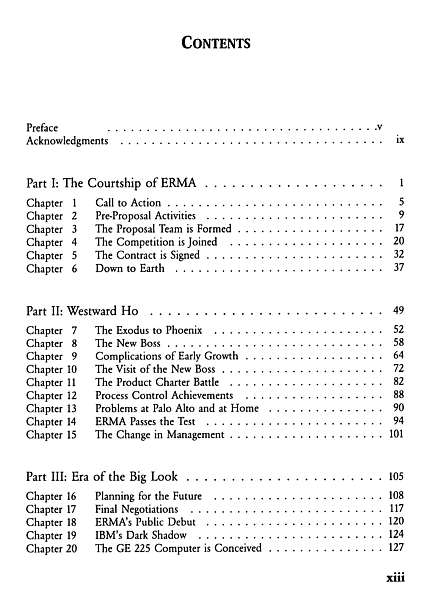
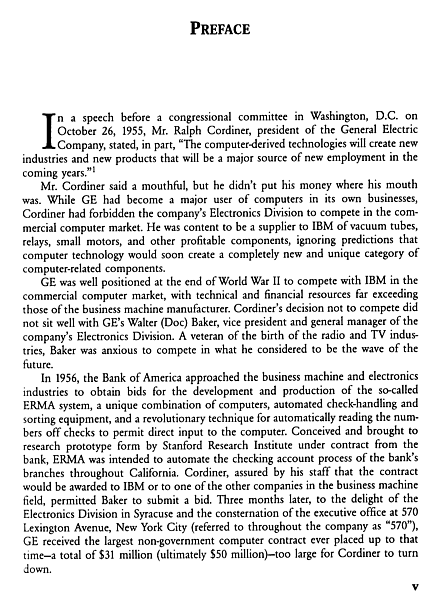
As mentioned elsewhere, SRI did not wish to get into the manufacturing business, so B of A solicted bid for computer manufacturers - and the non-existent General Electric "Computer Department" won. |
Synopsis of the first 100 pages of
"King of the Seven Dwarfs, General Electric's Ambiguous Challenge to the Computer Industry"
by Homer R. Oldfield, available from Amazon and IEEE.
|
The Bank of America was good at banking, had deep enough need and pockets,
but did not claim automation expertise. They hired Stanford Research Institute
of Menlo Park, CA to design a system for them. (Stanford Research Institute was
"requested" by Stanford University (not its real name) to not use their name,
so the name SRI was chosen and is still used.)
Among other problems that SRI addressed was the fact that there was no effective machine (computer) method of reading documents. (And OCR is still not reliable enough for financial transaction.) Ken Eldredge of SRI invented the MICR method of encoding and reading data from documents - this method prevailed over other competing methods - the American Banking Association adopted the MICR method. At the same time, transistors became generally available for practical computer use, and SRI proposed a system using these new transistors instead of the vacuum tubes of the era. General Electric prevailed in suggesting general purpose computers instead of hard wired special purpose logic, which it designed, built & programmed. And machines for encoding documents with MICR, and machines for reading/sorting documents had to be developed. SRI made a suitable prototype that showed sufficient promise for the Bank of America to want up to 36 commercial versions. SRI did not want to get into the manufacturing business, so Bank of America requested major computer manufacturers to bid on making 30 banking systems for them based on SRI's ideas and prototype. To everyone's surprise, the General Electric Computer Department, which did not exist, won the$31,000,000 Bank of America ERMA contract. General Electric corporate headquarters didn't know of the bid, and didn't know of this new "department". The same day the contract was signed, the bid team received a stern letter from G.E. president Ralph Cordiner stating "Under no circumstances will the General Electric Company go into the business machine business." The General Electric Computer Department chose Phoenix as headquarters, had a manufacturing building built, refined the prototype, built and/or OEMed the system elements, delivered the first system, passed acceptance tests December 31, 1958. Some "tightening up" of the equipment and operating procedures was necessary to reach the design goal of 55,000 accounts/day. B of A "encouraged" their clients and others to use preprinted checks using the new MICR along the bottom edge. (Look at your current checks!) By March, 1959, the machine(s) were processing 50,000 accounts/day and on September 14,1959, the Bank of America declared the system "operational". Now what should the brand new G.E. Computer Department do after constructing the ERMA machines?
The answer is not on this web page :-( You need access to
|

Pictures
And some scenes from my tour of the Bank of America Museum at - MOVED. received Nov 5, 2010
|

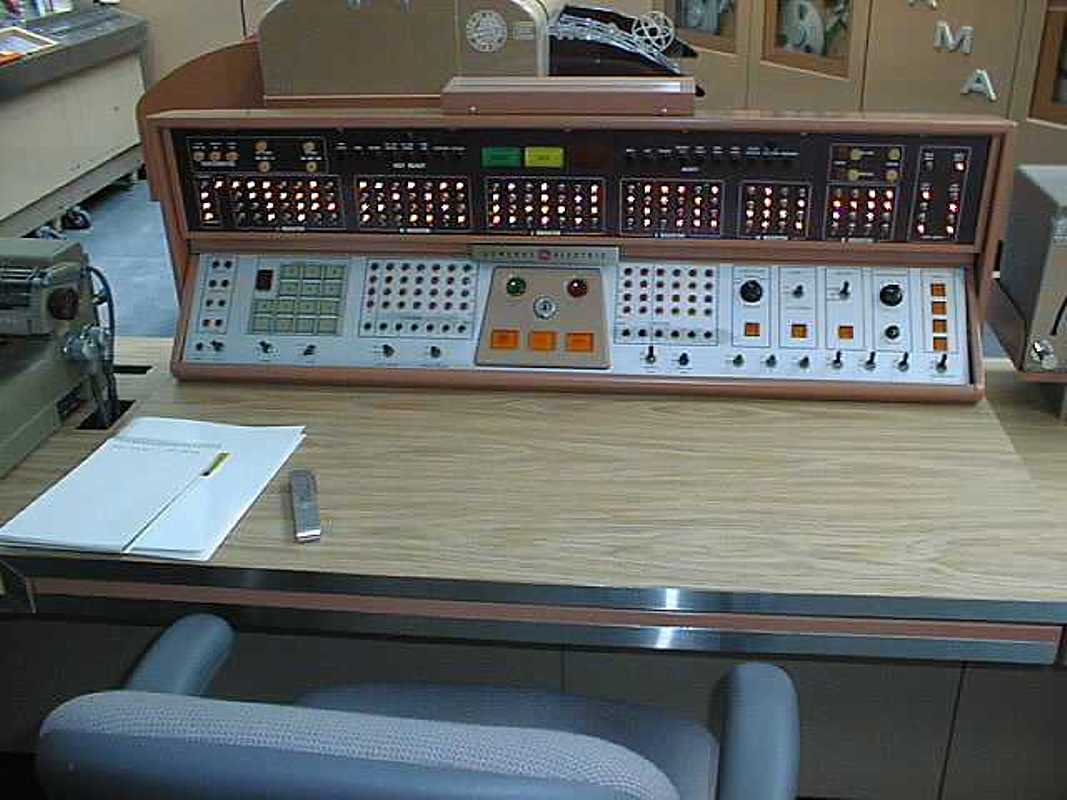
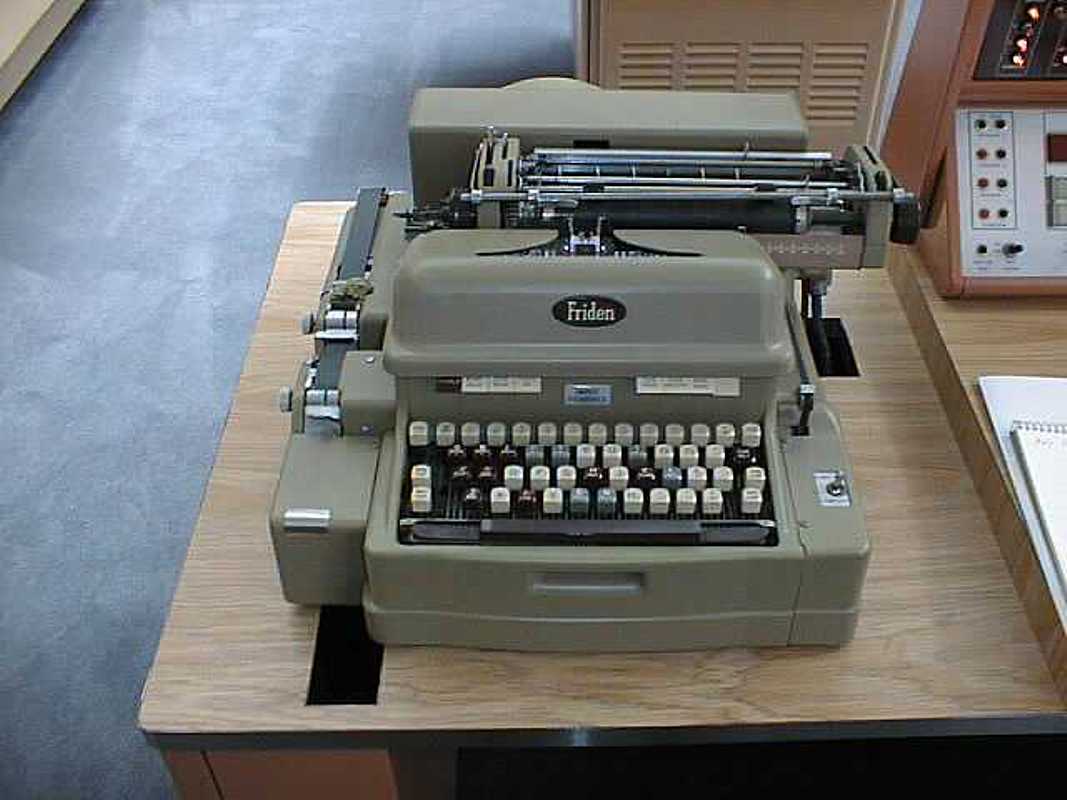
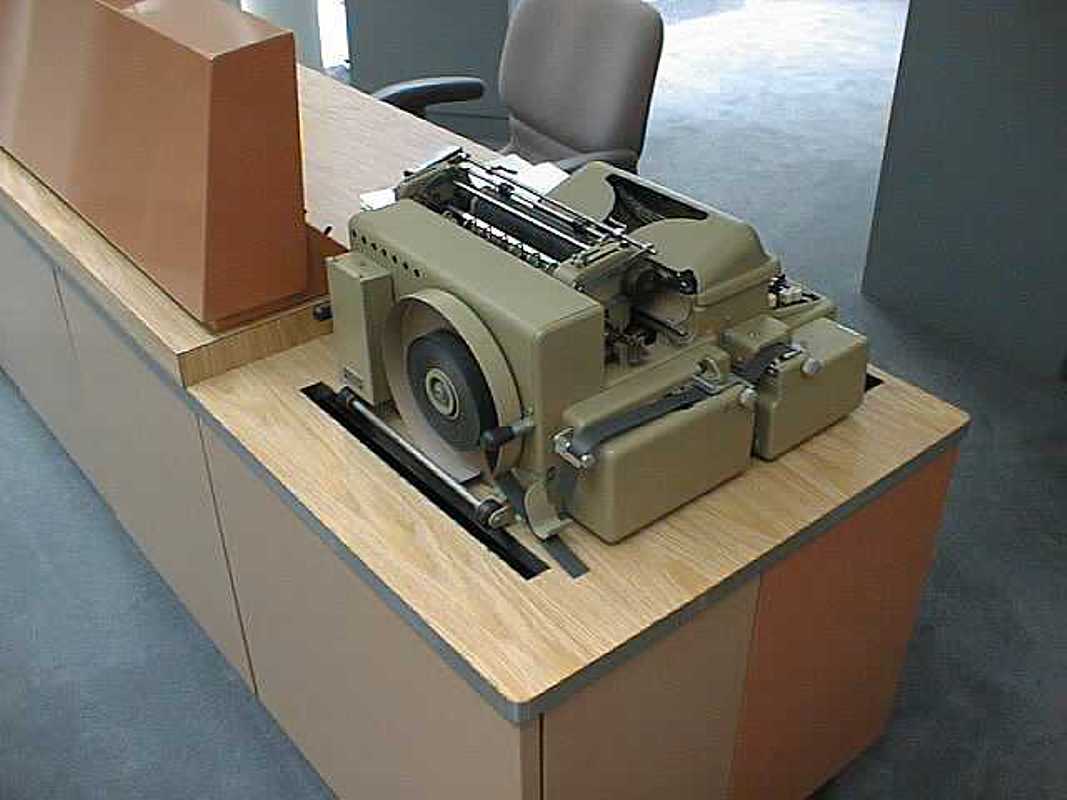
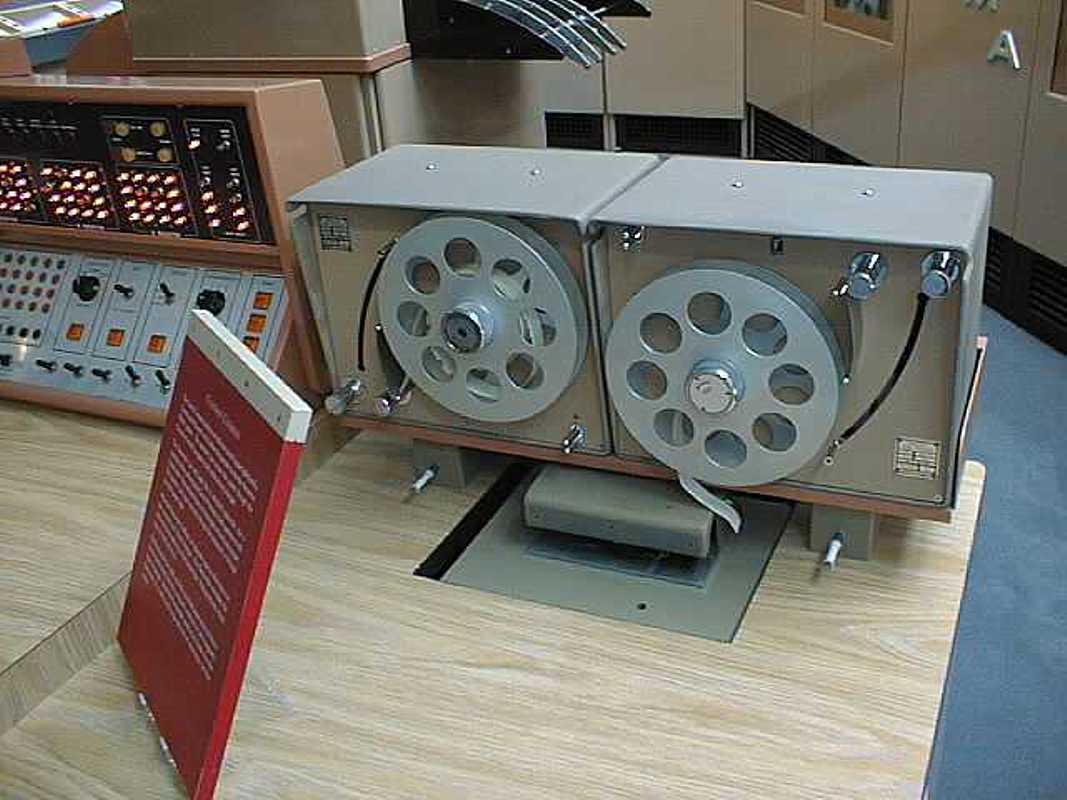
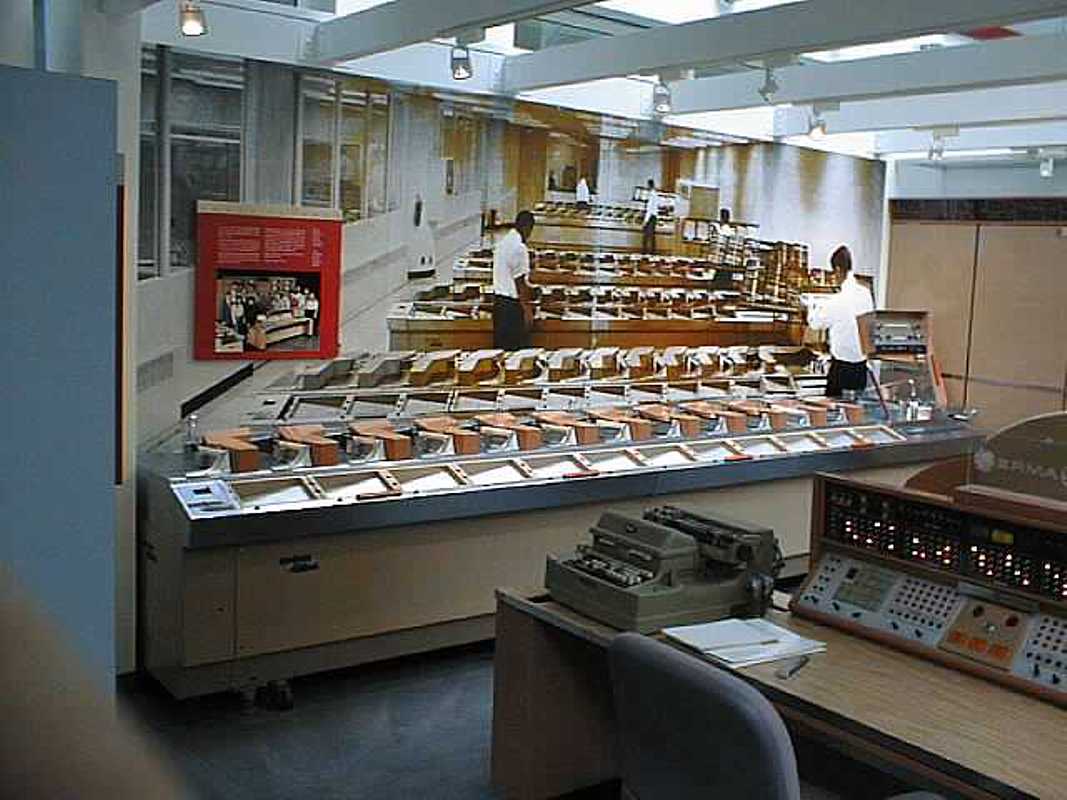
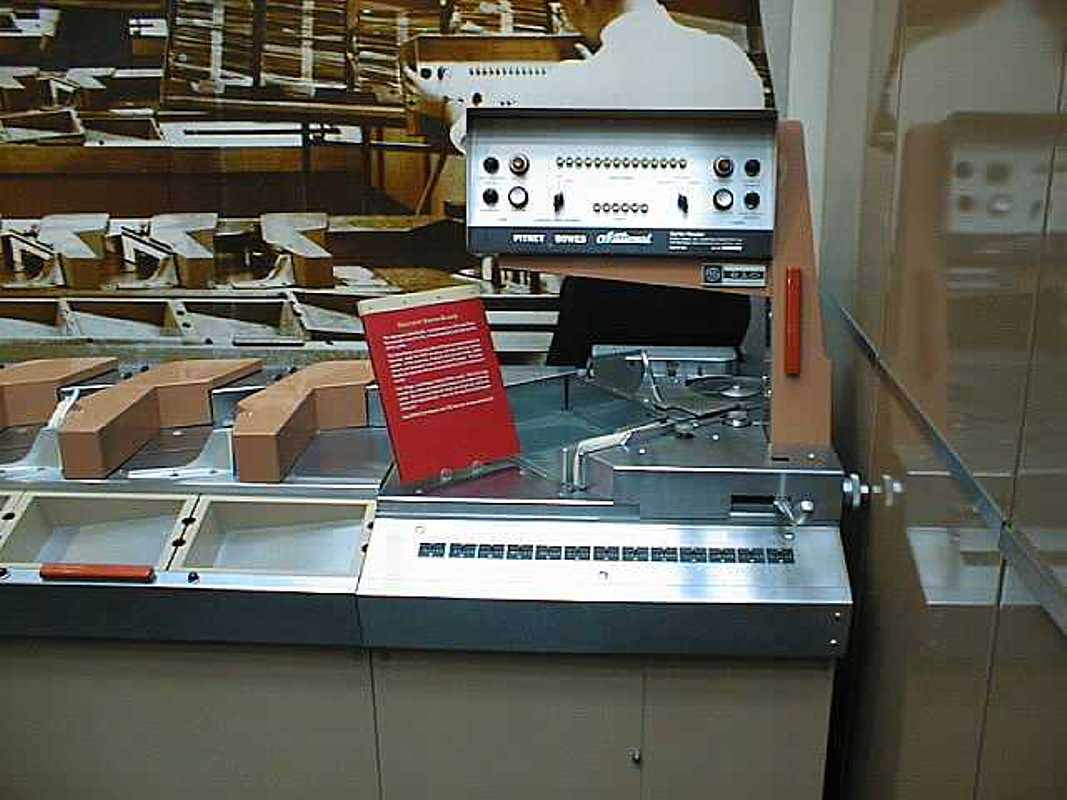
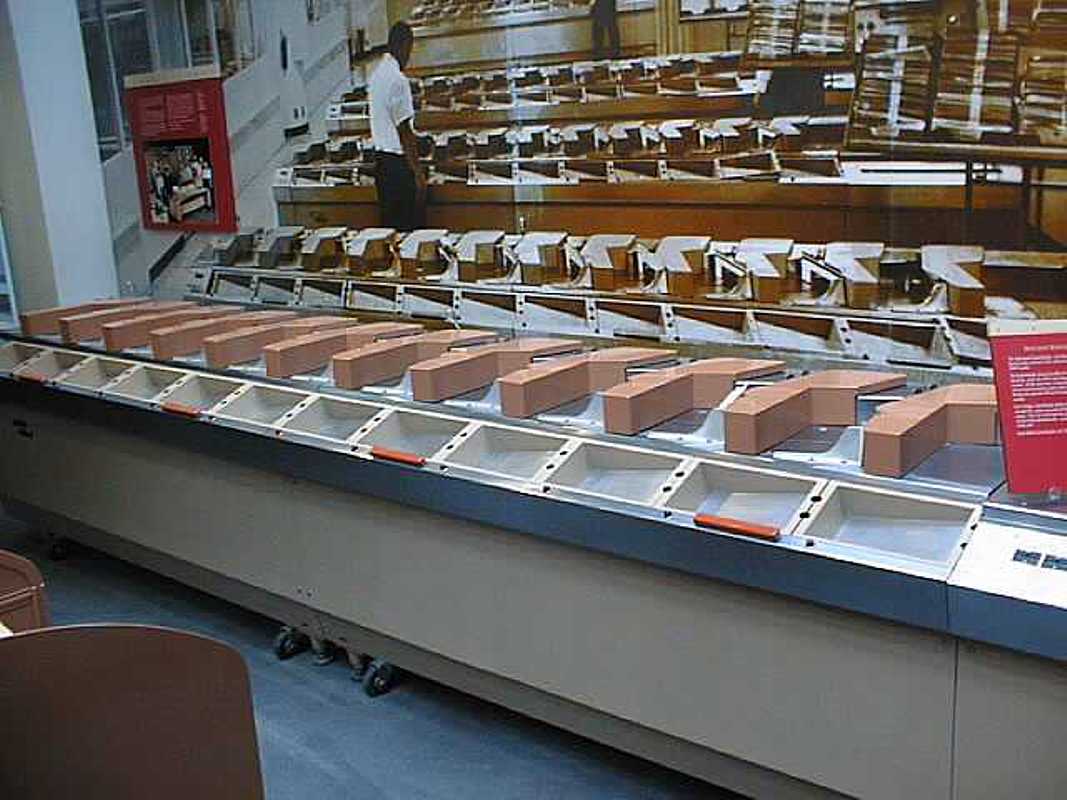

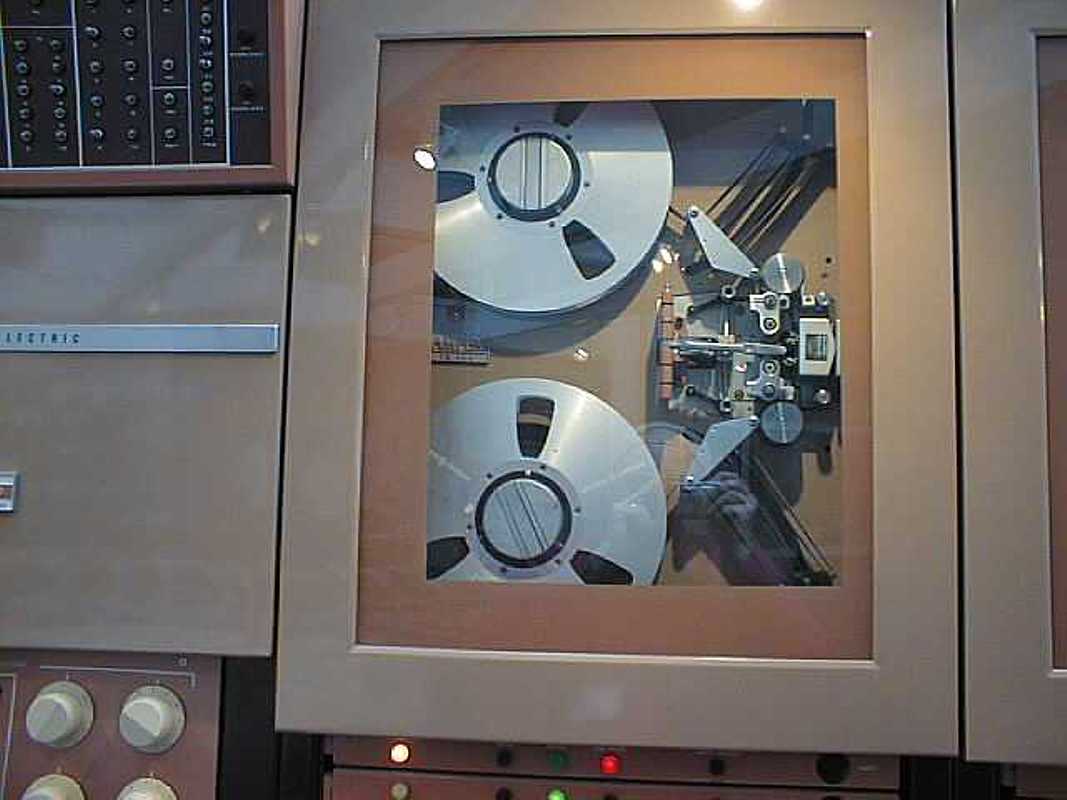
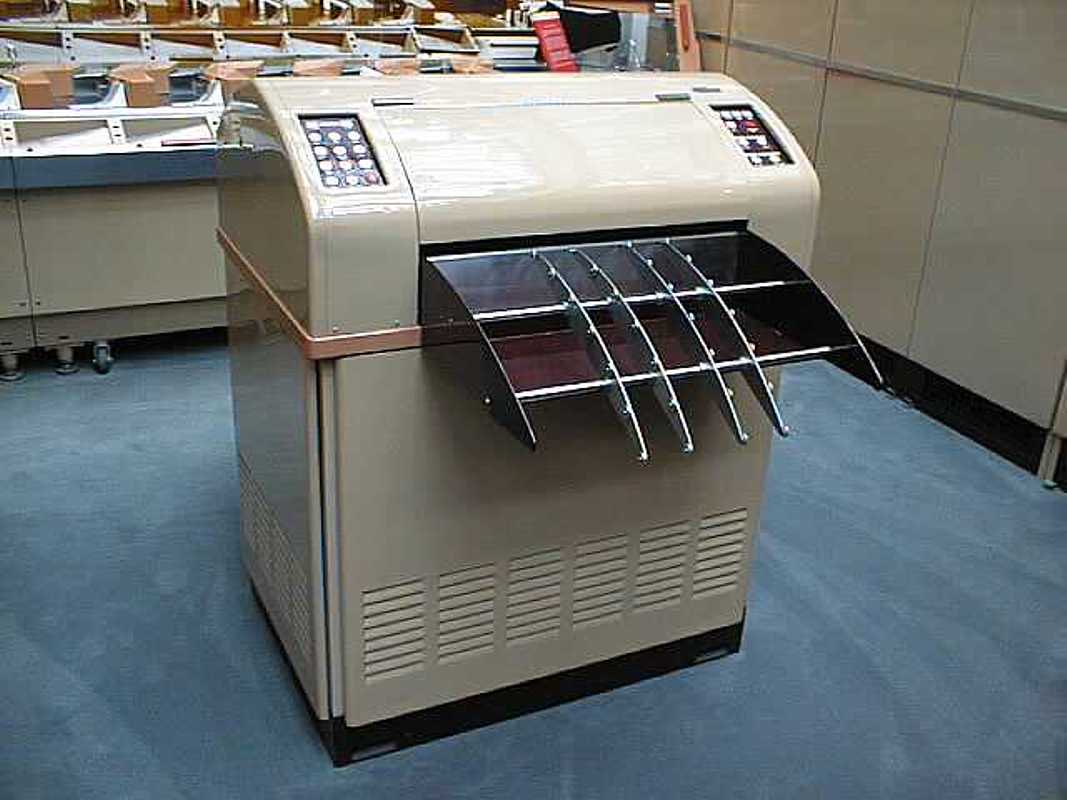
|
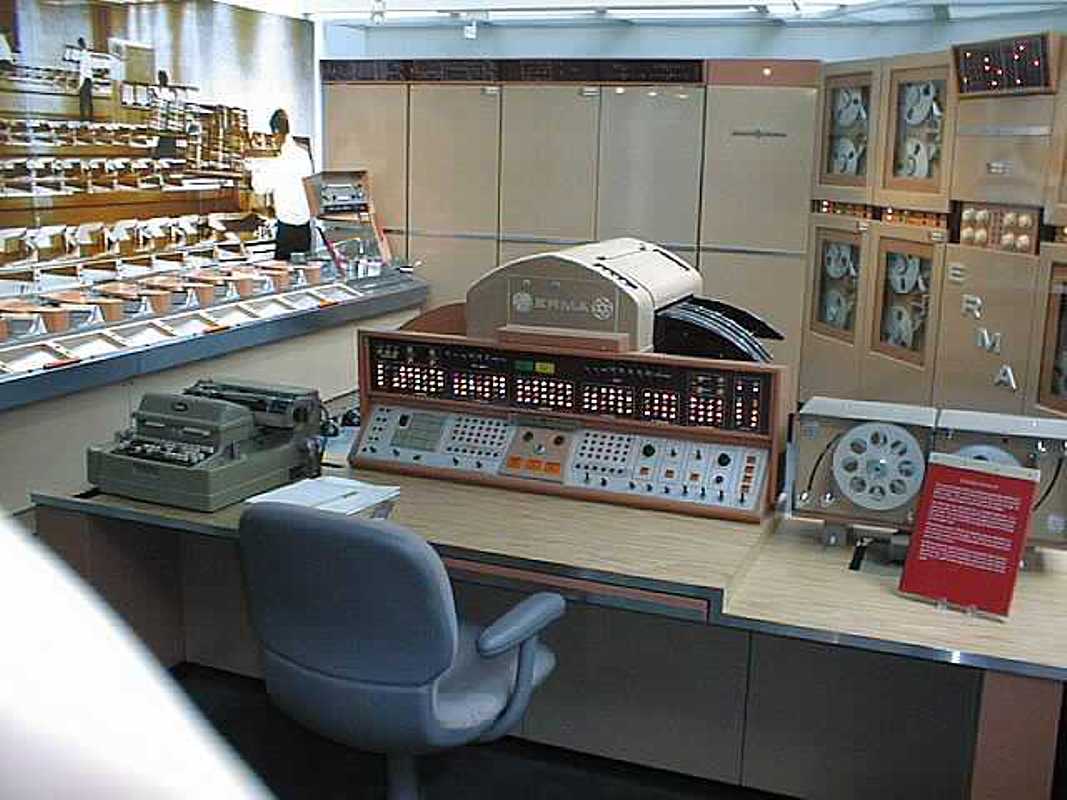
This machine was found in the basement of the BofA building
in San Francisco - much the worse for wear and rough handling. It is the
last survivor of over 30 machines delivered to BofA in the late 1950s.
It was lovingly restored to like original appearance by over 50
BofA employees - some of whom had been through the whole life cycle from
conception through replacement.
Warren Prince, of the late G.E. Computer Department, pointed out "The Development of the ERMA Banking System: Lessons from History", by Amy Weaver Fisher and James L. McKenney and was printed in the IEEE Annuals of History of Computing, Vol 15, No. 1, 1993. (A PDF version.) This document focuses on the development of the ERMA prototype by Bank of America and Stanford Research Institue (now SRI) during the period of 1950 to late 1955. SRI developed a system with "8,200 vacuum tubes, ... , two magnetic drums, and a refrigeration system." There are indications that this system was not programmable, requiring rewiring if procedural changes were needed by the customer, BofA. Unfortunately, 1955 was a turning point year for computers. Transistors became competitive in price with greater reliability, and core memories could be competitively manufactured with far greater speed. No serious computer was designed hereafter with tubes and drums such as the prototype. In December 1955, the Bank of America started to look for a company to manufacture the ERMA systems for them. SRI did not want to get into the manufacturing business. BofA contacted IBM, RCA, Texas Instruments, and others. Some mavericks in General Electric won the manufacturing contract, and wanted to use the new technology. SRI had a working prototype, but with now outdated technology. GE engineering was uncomfortable with SRI which was pushing to have the prototype technology used. GE implemented the ERMA computer as a general purpose computer with the new technology. On September 14, 1959, BofA and General Electric showed four of the proposed 30 systems running in a transcontinental closed circuit TV press conference. These 4 systems were capable of processing over 220,000 customer accounts in the Los Angeles area. The machines were using the newly developed and newly standard E13B magnetic ink font that GE had developed which was more human readable. This E13B font is used on the bottom line of your checks today. |
The E13B font, 1st used on this project, and on your checks today :-))
Magnetic ink character recognition,
Electronic Recording Machine, Accounting - wikipedia
Also see Battles with inks
Epilog
In any case, BofA went with IBM.
But damage had been done - delays had a direct economic impact on the banks
profit amounting to $1,471,000. Total impact was estimated to be on the
order of millions of dollars offset partially by IBM's contribution in
the form of paying all equipment costs, providing professional help valued
at $2,700,160 and due to the fact that IBM during the entire period maintained
an account balance of more than $14,000,000 in the bank.
Footnote 22 - "During the conversion, IBM had invested 66 man years of
field engineers and 10 man years of tape specialists to make the tape
system operable. After the conversion, IBM accepted the GE equipment
as a trade in, allowing credit for the remaining book value of the ERMAs.
A first for IBM, the allowance was kept confidential to avoid starting a trend."
The Joy of Dunning IBM :-))
"For 18 months I had the monthly joy of phoning IBM and dunning them
for payment of the $250,000 monthly bill. Today, it's hard to conceive of
such amounts.
George"
IBM 360 Tapes
They apparently did not pick up the later engineering changes. which were the result of field
and manufacturing experience. Basically, the 360 tapes had to go through that learning experience
all over again.
"I worked there"
Anyway, as a 'management' newbie, at first ... after training ... and being
'brain washed' for ERMA while at a local branch ... I got sent to
Bridgeport, California, up close to the Nevada border.
There ... ERMA was not yet implemented; and we had to do the processes
by hand; BOY WAS THAT FUN...???
Then in '67, back to San Bernardino, and more ERMA experience.
Even once got to visit their location in the outskirts of Los Angeles,
which was (as I recall) a 4 story building that was ... from what I recall
... computer 'stuff' on all floors. Even when we 'students' were taken around,
we were overseen by armed guards so that no body would try to tamper with the equipment.
WHAT A MEMORY !!!
Chuck
“Government is not reason, it is not eloquence, it is force;
The first office to develop{utilize} ERMA was in San Jose. My Father never finished high school.
His Mother got divorced and made him quit school and work in the Vallejo shipyards.
He started work at B of A when he was about 20. He didn’t know anything about computers in 1950,
but neither did anyone else. He also helped develop the B of A card, now Visa.
After he retired, he was a consultant for the Bank until he died.
ERMA now in Computer History Museum warehouse - June 2023
If you have comments or suggestions, Send e-mail
to Ed Thelen
Patent # 3,000,000 covering reading of magnetically encoded documents was
issued to K. R. Eldredge of SRI and assigned to General Electric.
1 megabyte .pdf file.
The ink used for the MICR characters can be magnetized, as is as part of the reading process.
The alphas "A" to "D" mark the beginning of various fields, such as issuing bank number, customer number and dollar amount.
Most fields are preprinted, but the dollar amount is printed after the customer writes the dollar amount.
This is the E13B font which is the banking standard and first used on the ERMA.

The ERMA system served the BofA well for 8 years (a long time for a commercial data processing system).
Unfortunately, when the time for replacement came, General Electric was no longer provided banking
oriented systems or peripherals. The now obsolete GE-225 series had been popular with banks.
The GE 4xx series was not suitable? ( ? could not respond to interrupts fast enough to handle the document handlers ? )
and the GE 6xx series was too large and expensive for handling documents. General Electric took themselves
right out of the banking business.
A short quote from
"King of the Seven Dwarfs"
BofA ordered the 360/65 and took delivery in July, 1966 with conversion
scheduled to be completed in December 1966. But conversion was deferred
as a result of IBM's continued delay in providing a multi-tasking
operating system and severe tape drive problems*.
Situation had not
improved by spring of 67. Ray of hope came in late May 67 with the
successful "start" of the demand deposit conversion, the banks largest ERMA application.
George Snively says (January 2005)
"The IBM contract to replace the ERMA systems had a delivery
penalty. IBM was to pay the ERMA maintenance until their system was up
and running.
Allen Palmer
( IBM 1401 Restoration Team ) said that
apparently the 360 tape designers took
the original design of the IBM 729 Mod V tapes ( 7 track ) and adapted that for the 9 track 360 tape drives.
from Chuck, Nov 2012
Regarding BofA's "ERMA" ... I was very involved in 'her' process ...
and also pre-ERMA process. In the mid 1960s, after being dischraged
from the Navy, I went to work for BofA in San Bernardino, California.
At that time, and up to the mid 1980's, banks were restricted to a state ...
and BofA had hundreds of branches there in California.
like fire, a troublesome servant and a fearful master.
Never for a moment should it be left to irresponsible action.”
George Washington
I’m glad to hear that ERMA is displayed.
My Father was Charles Conroy, the Bank of America’s representative at SRI in developing ERMA.
By the way, I know that A. B. Dick came up the magnetic ink numbers on the bottom of the checks.
I was at the unveiling in 1955.
Ed Thelen comments:
OH, the magnetic ink - and the battles/tensions with the banks
Bankers are accountants, not techies. At least at the Pittsburgh National Bank,
where I had a GE classmate and occasionally visited and supported
https://medium.com/chmcore/erma-can-do-it-f05bc520873d