|
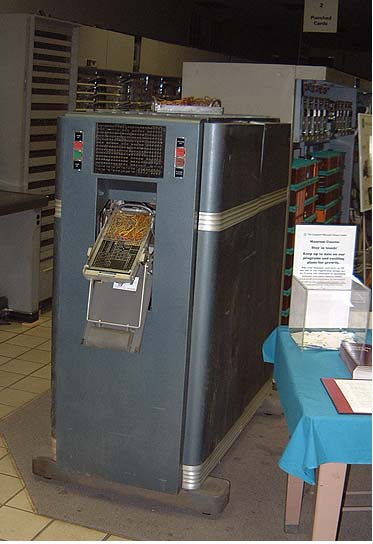
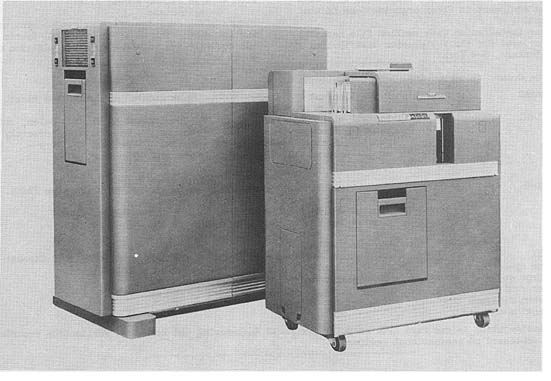
Link to IBM-604 -
by Ron Mak
from Bernard Palicki, February 2006
|
Dear Sir,
At age 75, am probably just one of a very few still alive who was
employed by IBM as a 'Customer Engineer' (CE), in the IBM Data
Processing Division, one who performed service on the IBM 604
Calculating Punch.
Hired into IBM on 1/15/53, after an honorable discharge from the US Air
Force(AF) in Dec 1952.
Previous experience in the US Air Force was accepted as qualification
for that employment. Previously served in the US Air Force as a
Technical Instructor of 'Electronics Fundamentals' [2nd Phase - from
AC & DC Circuit Analysis, through motors, generators, power supplies
and filter ckts, vacuum tubes, amplifiers, oscillators and transient
ckts],
Spent 12 days of training on the 604 in a Detroit, MI Branch Ofc. I
worked out of the IBM Branch Ofc in Toledo, OH. Was sent for this
training because I was being assigned to the accounting machine
department of the 'Electric Auto-Lite Co. headquarters, in Toledo. OH,
as 'resident' IBM CE for Auto-Lite.
Auto-Lite, at its peak, manufactured all the products required for all
auto ignition systems for all Chrysler autos - Chrysler, Dodge, Desoto
and Plymouth.
That office, for my assignment at Auto-Lite, processesd all accounts
payable and receivable, plus payroll for some 7000 plus factory
employees on a weekly basis.
Have a few vivid recollections you might want to have:
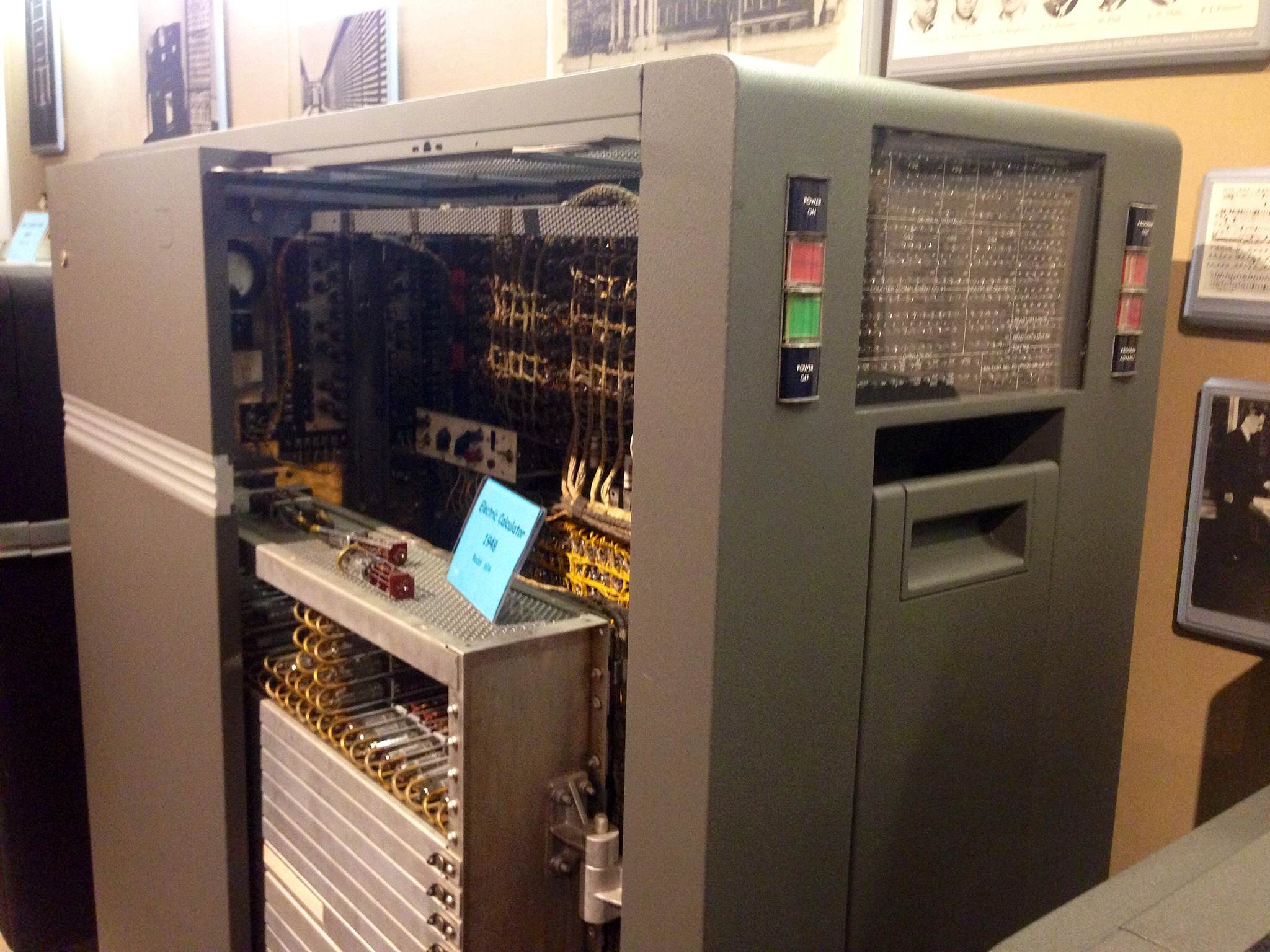
- The IBM 604 contained some 2,000 vacuum tubes.
- A total of 455 pentagrid converters (vacuum tubes) were required
for the 'column shift register' , required for both multiplication and
division. The 1st and 4th grids of these tubes were used to control
the ON-OFF condition of these tubes.
- The Counter was 12 digit positions. The 13th position was used to
designate polarity of the number in the counters as + or -.
- Five vacuum tubes were required for each of the 12 digit positions
of the counter. Four tubes were required for each of the 'counter
digit-position' numbers displayed, using 1, 2, 4 or 8 (the binary code
- also known as the 'byte') for display of a number. The fifth tube
was required to allow for binary code display of a number using
four-tubes.
The 'cut-off condition' of counter tubes was the number contained and
displayed in the counter. A neon bulb was connected in parallel with
each of the binary code tubes. of the counter When a counter tube was
in a cut-off condition, in the OFF position, the neon bulb was lit.
- Positive numbers were displayed as complements of 9; e.g., a
positive 1 was displayed as 8, a positive 2 was displayed as 7, a
positive 3 was displayed as 6, etc.
-
All addition of positive numbers was done by additions of numbers as
'complements of nine'. All subtractions of numbers was done by
addition of true numbers.
-
Negative numbers were displayed as true figures.
-
The 13th position of the counter indicated polarity (+ or -) of the
number displayed by the counter.
-
Other:
- The IBM 604 employed what is known as 'parallel processing'; that is,
all 12 positions of the counter were were transferred simultaneously to
a storage unit, and/or vice-versa. The IBM 604 was the first
commercially available electronic computer on the market.
- The IBM 650 Magnetic Drum Calculator, successor to the IBM 604, was
the first commercially available execution of 'serial processing' of
number/numeric data, and was the forerunner of the personal computer.
Also received training and service experience with the IBM 650 Magnetic
Drum Calculator.
Would be pleased to hear from you with acknowledgement that you
received this info and whether or not it any of it merits inclusion at
your websight.
Very truly yours,
Bernard Palicki
|
|
IBM 604 Pluggable units, looking for help answering a
question or two!
from Joshua West February 05, 2016
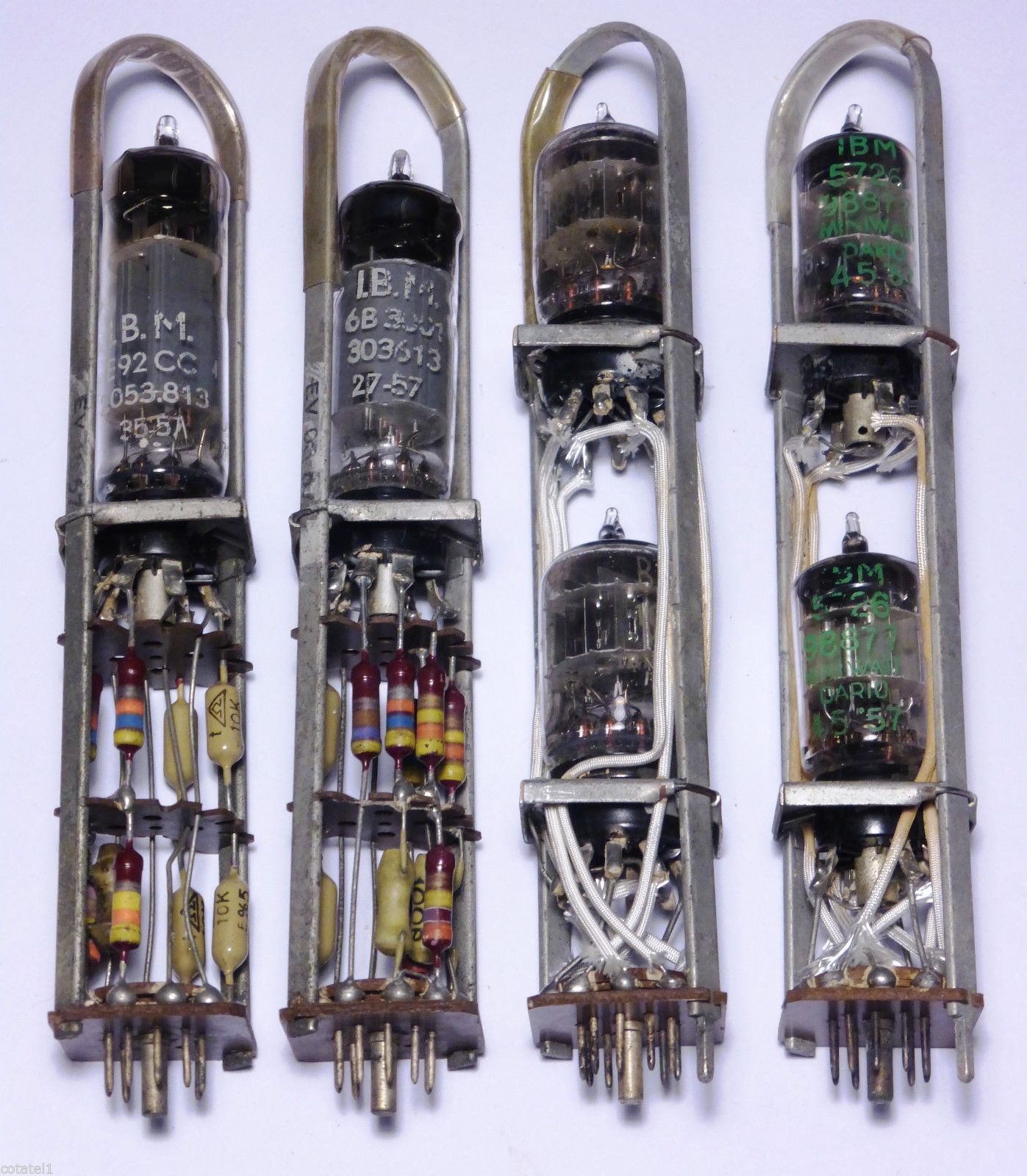
... I am in the process of purchasing the below:
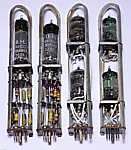 I'm working on a shadow box (picture frame) to put these into as a display item, but along with want to produce a plaque that is accurate.
My question is: What is the difference in functionality between a single tube and double?
|
Paul Pierce
(web site)
responded
"Joshua,
Nice find. The function of the plugin module is indicated by the label on the top:

IN-36 is an inverter, it changes "0" to "1" and "1" to "0".
   It was used in machines like the IBM 604.
DD-501 is simply a set of 4 diodes (2 per tube) for use as needed
    between logic circuits in a computer. It was used in the IBM 650.
DS-521 is another arrangement of 4 diodes.
    It was used in later machines like the IBM 650.
PS2 is probably a "power" circuit that increases a logic signal
     so it can be used in more places in the machine.
     It was used in machines like the IBM 604."
Paul
|
from Curious Marc, via
https://hackaday.com/2018/01/12/debouncing-the-old-fashioned-way/
- Jan 2018
|