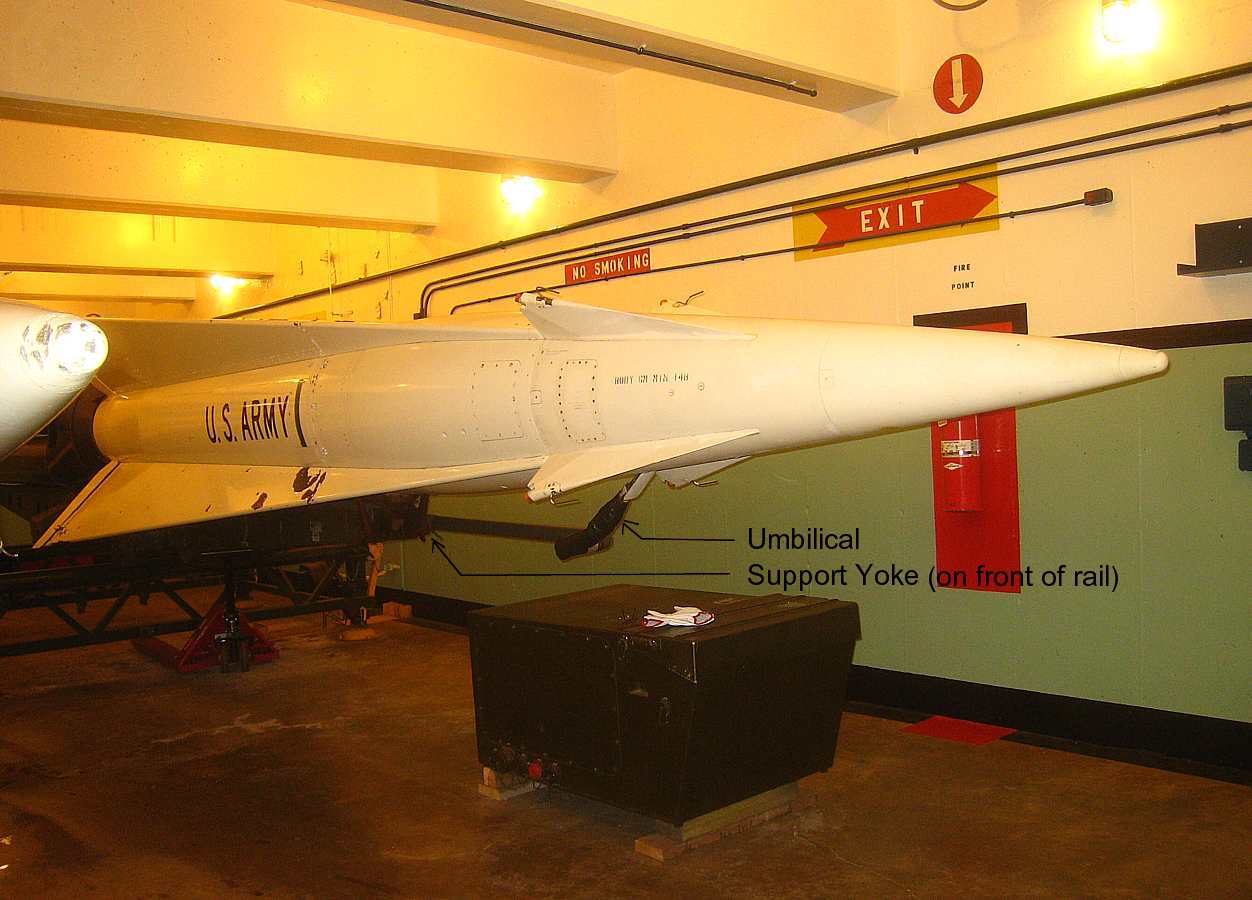
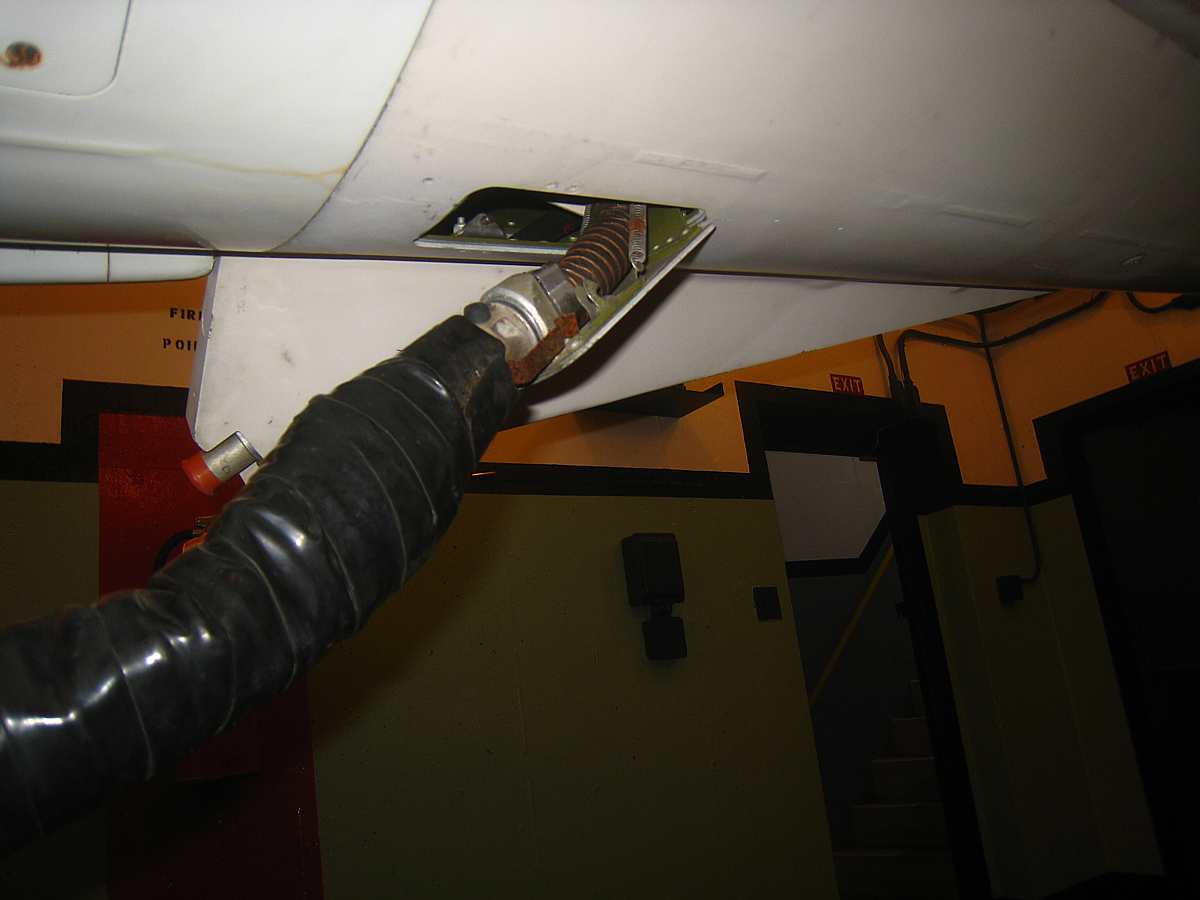
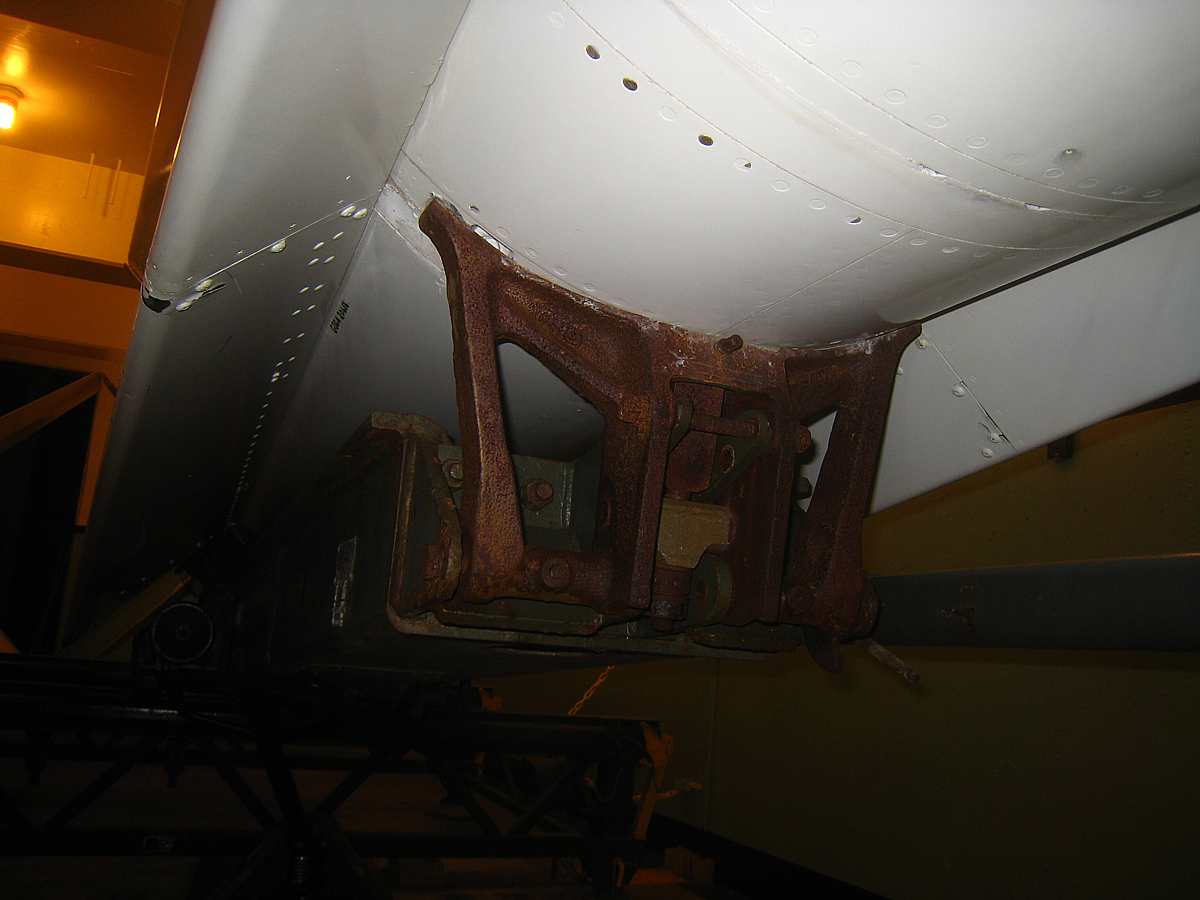
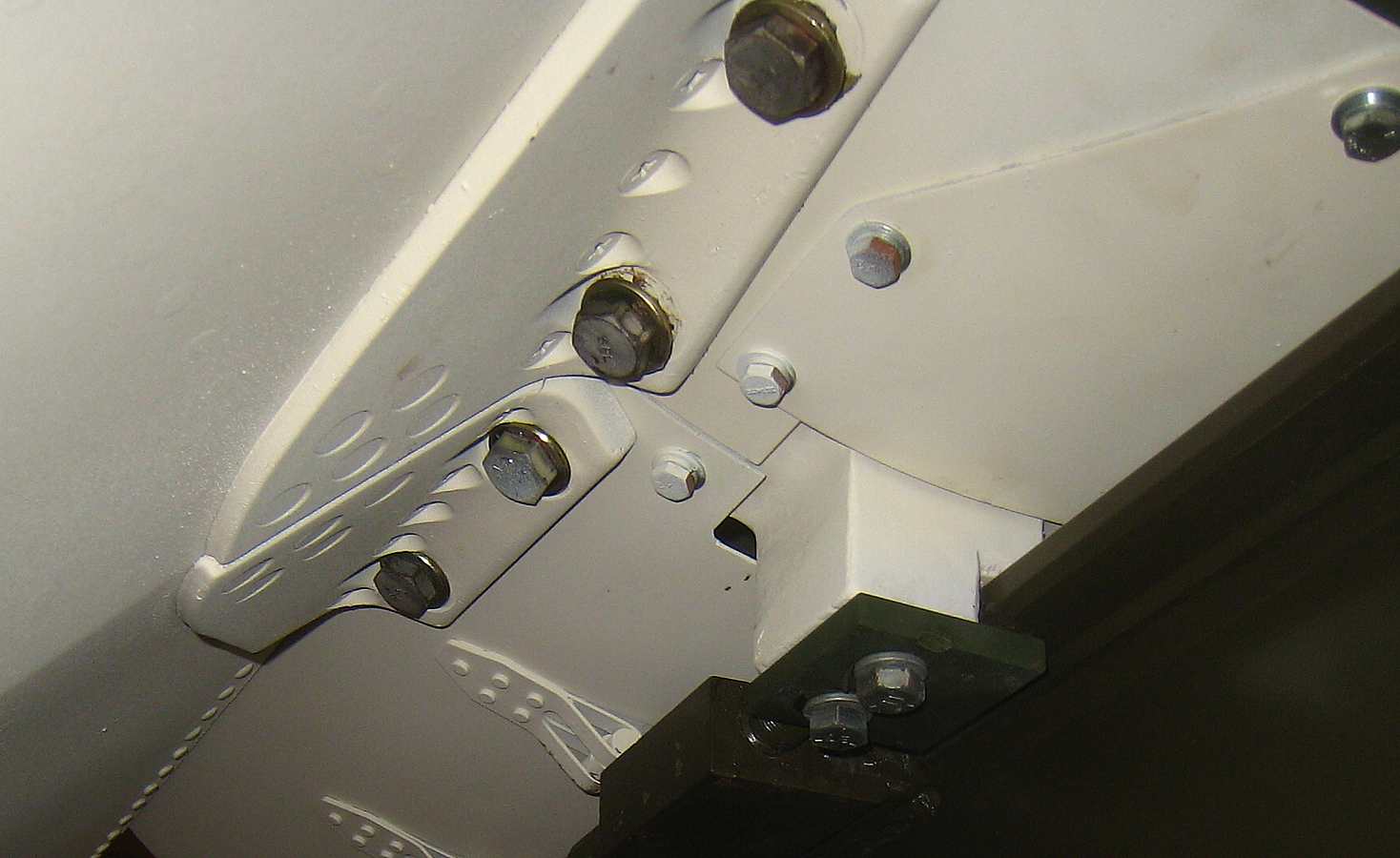
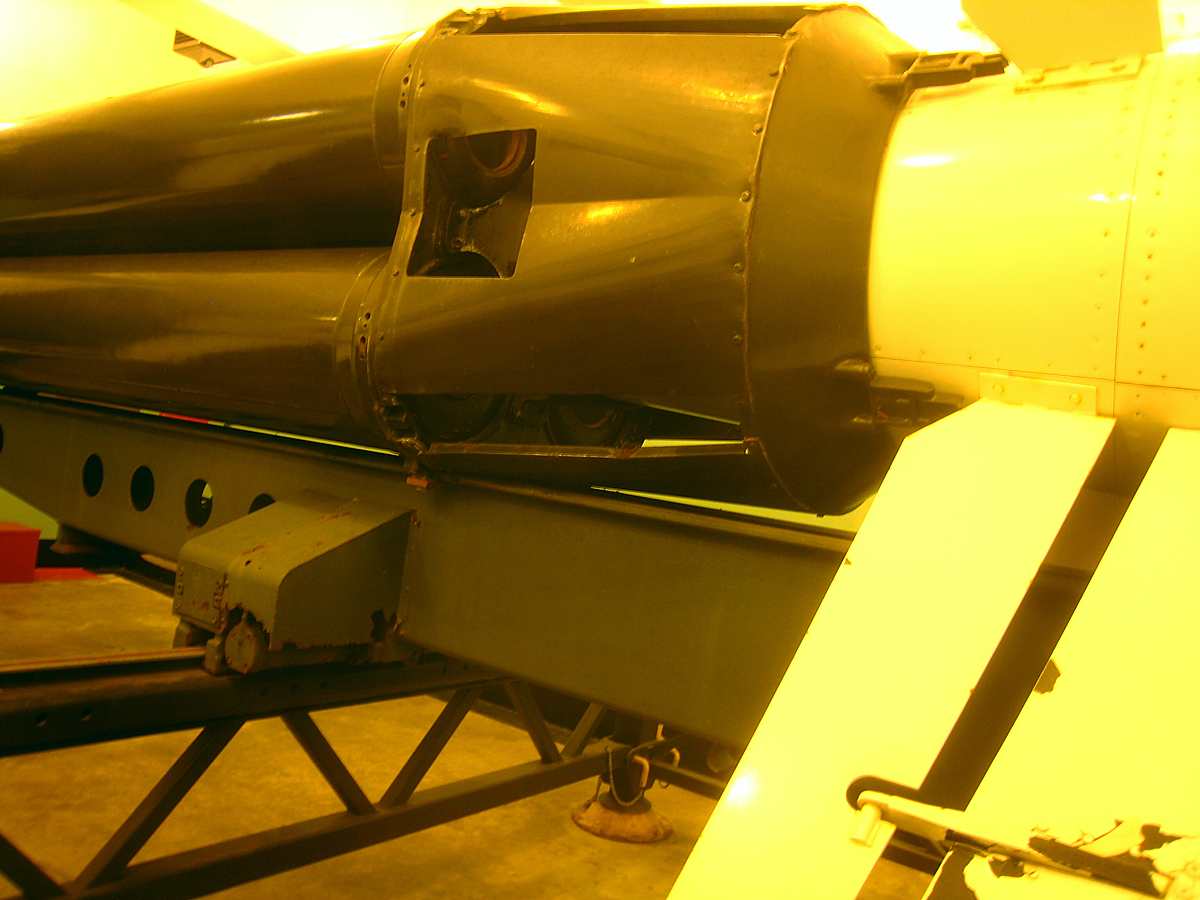
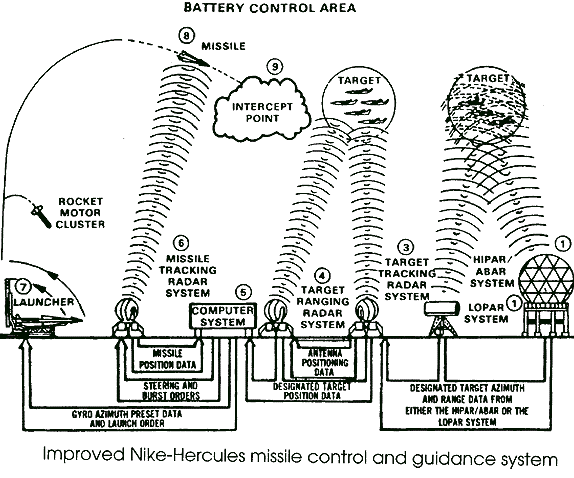
The T-45 conventional high explosive warhead weighed 1106 pounds and contained
600 pounds of HBX-6 military explosive.
For further discussion see
What about the conventional warheads?
from Frequently Asked Questions
An e-mail
From: rgplante@aol.com
Date: Fri, Jul 09, 2010 10:25 am
To: dpiland@zianet.com, ...
Doyle:
Info on R&D items that were not fielded is hard to find.
Cagle's Hercules history
(warhead pages)
(400 K bytes) mentions a T46 cluster warhead,
which could be the sub-munitions warhead you refer to. Though not stated,
that type warhead would typically be used on a surface target.
I did a quick google search on the T-46 and found this DTIC document
APPROVED FOR PUBLIC RELEASE. Your contacts at WSMR should be able to get that for you,
and it may answer your question. If it doesn't, your contacts in Huntsville would
be the next source to try.
Accession Number : AD0532166
Title :   Effectiveness of T-45 and T-46 Warheads against Surface Targets.
Descriptive Note : Technical memo.,
Corporate Author : PICATINNY ARSENAL DOVER N J
Personal Author(s) : Matzkowitz,William
Report Date : AUG 1959
Pagination or Media Count : 41
Abstract : The effectiveness of the Nike-Hercules Missile equipped with T-45 and
	T-46 Warheads and in the surface-to-surface capability mode of operation
	is evaluated against personnel and truck targets. (Author)
Descriptors :   (*Warheads, Surface targets) (U) *Bomblets, *Guided missile warheads,
	*Surface to surface missiles, Antimateriel ammunition, Antipersonnel ammunition,
	Vulnerability, Soldiers, Trucks, *Fragmentation warheads, *Cluster warheads,
	Kill probabilities, Payload, Velocity, Range(Distance), Height of burst,
	Terminal ballistics, Lethality, Graphics
Subject Categories : GUIDED MISSILE WARHEADS AND FUSES
      SURFACE-LAUNCHED GUIDED MISSILES
Distribution Statement : APPROVED FOR PUBLIC RELEASE
|
|
|
also see:
|
The Nike missile warhead section (M-22, M-23 or M-97)
was an integral part of the Nike missile.
Nike Hercules used the W-31 warhead weighing 1123 lb.
Yield was switchable between 2 or 40 kiloton
from Richard Parrish - Feb 12, 2019
I’m attaching a picture of the nuke that was used in the Nike-Hercules that I just acquired.
I hadn’t seen one previously and some of the pictures that I have seen don’t jive
physically with the construction and size of the Hercules.
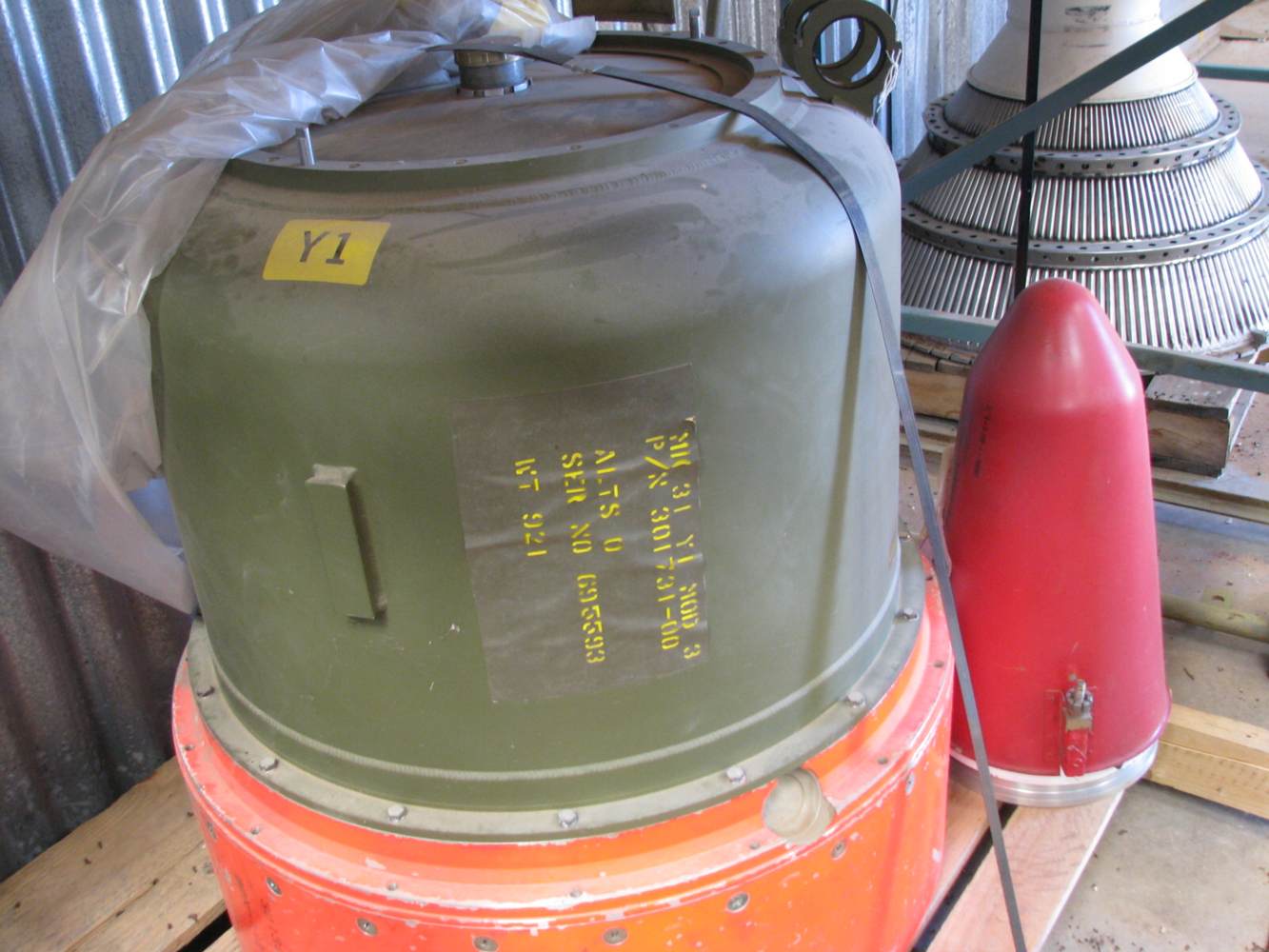
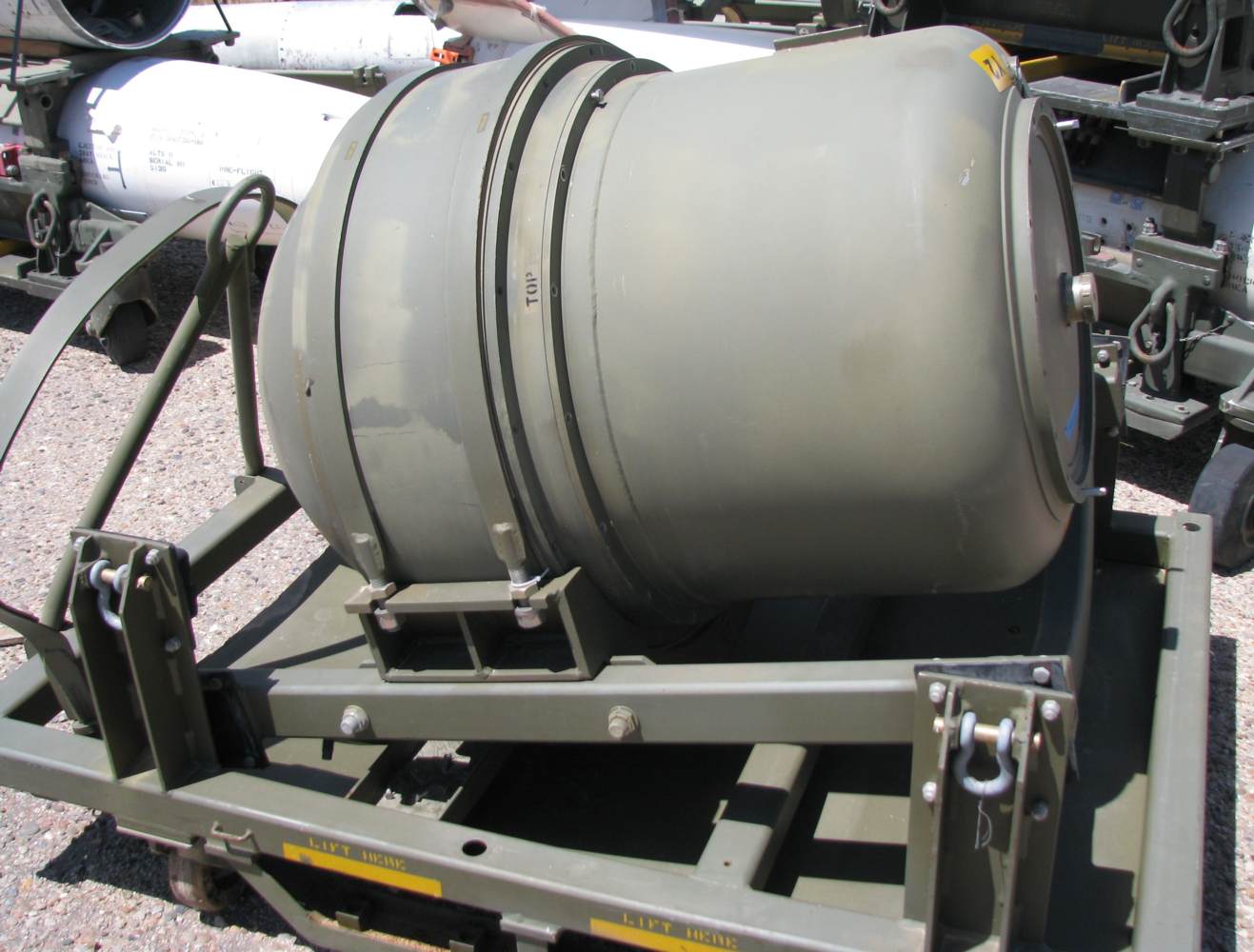
I recently met a gentleman named Clay Perkins who was able to get the National Atomic Museum in Las Vegas to take some pictures of one that they have in a warehouse. Based on the pictures he got for me, I’m going to see about getting a replica made to display here in Terrell [,Texas].
|
from Charles Everett May 2013
|
Charles Everett says
"{This} is supposed to be an actual W-31 warhead photo".
|
R. Tim Coslet Feb 2011
Also see
Operation Ranger was the fourth American nuclear test series. It was conducted in 1951 ...
Subject: Operation Redwing (1956) Nike warhead development
REDWING also made material contributions toward the weapons programs
desired by the DOD in February 1956, including weapons in a 10" to 12"
diameter range for missile applications, including the NIKE I,
TERRIER, LITTLE JOHN, Follow-On DING DONG, LACROSSE, and ASROC (this
small-diameter weapon program eventually became the W-45 project).
Specific systems now under development at UCRL and LASL included
warheads for an air-to-air rocket (the XW-25), and warheads for the
TALOS, NIKE-B, and BOMARC anti-aircraft missiles. A small nuclear
depth bomb, the LULU, was also under development by LASL and the Navy;
the weapons labs and the Air Force were working on nuclear warheads
for both intercontinental and intermediate-range ballistic missiles.
Chuck Hansen: Swords of Armageddon
You mentioned a 2 foot NIKE warhead, ever hear of a 1 foot before?
--
R. Tim Coslet
R.TimCoslet@gmail.com
Patent GB630726, 1934 Leo Szilard
|
For a description of connecting ("mating") the W-31 to the Hercules,
see Mating the W31 Nuclear Warhead to the Nike Hercules Missile
From Odom, James F.
To answer Mr. Man-Wou Jee's question about safety measures on the Nike
system, was the two man rule. It took two people to arm
the missile. One person had half of the combination and the second one had
the other half. On custodial sites (Greece, Korea, Turker, etc),
a PAL device (permissiave action link) was used, and it took two persons to
remove it so the arming device could be installed.
James Odom. Nike crewman through 1st Sgt. from Aug. 1960- Sep. 1974 in the
states and in Korea and Germany after that.
For further discussion see
What about the nuclear warheads?
from Frequently Asked Questions
Another source of nuclear warhead data is
"The Swords of Armageddon"
(suggested by
Nicholas Maude which I have not seen).
Bill Evans suggests:
For some interesting info on 'our' nuke warheads, see
- - http://www.fas.org/nuke/hew/Usa/Weapons/Allbombs.html
scroll down to W-7, W-31 (also see W-50 for Nike-Zeus)
then look at
- - http://www.fas.org/nuke/hew/Nwfaq/Nfaq1.html
section 1.5.1 for info on what a 'boosted' weapon is (what the tritium did).
|
Shawn Hughes sent this
Design Release Status of the XMC-546 Cartridge Support
1.5 MByte .pdf - which may or may not have any meaning to anyone - June 2012
|
Numbers of Nuclear Warheads per Site
I (Ed Thelen) have never filed a "Freedom of Information" request.
Michael Binder kindly sent a response to an early one that he filed
Ed:
The letter is attached. You can read it as saying that all Herc sites had
conventional and nuke warheads, or that the ratio of conventional
to nuke could range from zero to infinity (i. e., there could have been no conventional or no nuke warheads at a particular site).
I'm sticking with the first interpretation.
Michael Binder
|
from James Newman
Dear Ed Thelen,
I just had several CONAD historical documents declassified from the Air Force
and NORAD covering the years 1955-1957. In the CONAD History for the period
July-December 1957 Supporting Documents Volume IV located on Microfilm Roll
K4010. I am still trying to get the rest of the microfilm roll declassified
but portions of the roll are currently being reviewed by the Department of Energy.
Supporting Document # 146 (Which is very faded with age and can barely be made out)
From what I can make out from this document is that there are sixteen MK 7
nuclear warheads allotted per battery. See below. 7 high yield, 6 medium yield
and 1 low yield alloted per battery. I have retyped this document to the best
of my ability. As this document and others on this PDF file are extemely faded
and in this condition when it was scanned as a pdf in very poor condition.
NOOOP:

SUBJECT: "Allocation of Nike Hercules Nuclear Warheads"
30 September 1957

TO:(FADED words)USAF
(FADED words)NORAD
Washington D.C.
- (Faded words) 21 December 1956 established the (faded words) CONAD (FADED Words)
the FISCAL YEAR 1958 (faded words) Period (faded words) allocation of nuclear
warheads for NIKE HERCULES.
- U.S. ARMY AIR DEFENSE COMMAND was informed (Faded Words) was planned (Faded words)
1958 (Faded words) NORAD (Faded Words) nuclear warheads for NIKE HERCULES batteries.
Specific type, quantity and and desired distribution are contained in paragraph 5 below.
- These batteries will defend the critical industrial and population complexes below.
This fact emphi(Faded words)the need for expedious (FADED words) in provideing the
units with atomic warheads. If the warheads (Faded words) requested have been shipped
(Faded words) the limit of Presidential authority (faded words) it is essential
(faded words) in sufficient numbers from the JCS reserve (faded words) prepositioned
to the battery locations listed (Faded words).
- In event the above requested amendment to SM-1025-56 is approved it is further
requested that these warheads and nuclear capsules be positioned as follows:
Defense Area    Type Warhead     Type Nuclear Capsule    Numbers

New York        MK 7 MOD 2E                                 7
                                    190-DE                  6
                                    170-DE                  1

Chicago         MK 7 MOD 2E                                 7
                                    190-DE                  6
                                    170-DE                  1

Philadelphia    MK 7 MOD 2E                                 7
                                    190-DE                  6
                                    170-DE                  1


Washington-Baltimore   MK-7 MOD 2E                          7
                                    190-DE                  6
                                    170-DE                  1
- The radio of Nuclear to NON-Nuclear warheads in the basic load of a
Hercules battery is 1 to 3.
The ratio of one medium to six small yield nuclear warheads shown in paragraph 4
above will provide each battery with an atomic capability using medium yield
weapons against massed formations of long range as well(FADED words)capability
against single aircraft when using the small yield warheads. In addition the
small yield warhead will be available for use against relatively low altitude targets.
- It is emphizied that this request is over and above the allocation (FADED words)
Marshall Carter
Major General USA
Chief of Staff
|
from Michael Binder - Nov 19, 2019
Mix of warheads
|
My very first FOIA was submitted to the Army in 1984 for information on the nuclear warheads for Nike-Hercules.
The response was that all Herc sites had a mix of nuclear and conventional warheads, the ratio being classified
(called a subcategorization, or subcat, of the stockpile). Of note, that information was classified at the time according
to joint DOE/DoD classification guidance, which protected the identity of specified nuclear warheads at any current or
former storage location. It was only in the early 2000s, after I had gone to work for DOE, that DOE and DoD agreed
to declassify the identity of retired warheads at former storage locations, permitting the release of the fact of W31s at
former Herc launch sites. So, the Army jumped the gun by 20 years.
Attached is a page from the Army's Nike-Hercules history. Priority number 22 shows that half of the Granite site was
converted from Ajax to Herc operation on 17 APR 1959. That conversion was of 2B and 2C magazines. Even after
conversion to the solid-fueled Herc, Nike launch sites retained a capability to launch the liquid-fueled Ajax, which can
be seen in photos of some launch sites depicting Ajax and Herc erected on launchers atop adjacent magazines. Also,
the later city defenses (St. Louis, Dallas, KC, etc.), which were built during the Herc period, still incorporated the Ajax
liquid fueling area complete with acid/JP-4 drum erecting stand and depressed areas for holding acid-neutralizing limestone.

|
Still Classified ?
from Ralph Staunton < ralphstaunton @ bellsouth . net > Dec 03, 2013 8:01 pm
|
Doyle is correct that all European sites with Army and/or Air Force Custodial teams
HAD ACCESS to Nucs. Many sites had Air Force Custodial Teams, some just Air Force
Communications Operators. What countries WOULD NOT KNOW …and this was a safety and CONTROL measure…. Was IF THEY HAD LIVE NJCS IN THE AMMO BUNKER OR NOT.
Some would have maybe one out of three LIVE, maybe ALL THREE or their current
inventory missing a critical part/component/or material. IT WAS ALWAYS UNKNOWN. A critical part would often be switched during a site
visit/inspection/scheduled maintenance. This was also true for a Nuclear Capable
non-US Artillery Battery with a Custodial Team, and also Lance.
Yes, there was the same guessing game with the 8” and 155s and Lances. First 6 Lance
Self-Propelled Launchers went to 3rd Group Missiles (M-752s) in Jan, 1975.
Yes to a question…. After ALL Nuc Tactical was removed during SILENT ECHO, any units kept active by the host country were HE. Ralph
|
from Mark Morgan < rangermk @ sbcglobal . net > Dec 03, 2013 8:08 pm
|
The yields - or the range of the yields - is open source, can probably find on Wiki or
from FAS. Docents who did not serve in previously serve in ARADCOM should be able to
talk yields; if they are prior military, it'll come down to whether they had to sign a pre-discharge/pre-retirement non-disclosure agreement,
like we did in aerospace. If you worked in a specific program and signed the agreement,
then no, you still can't talk about certain information. MK
|
from Michael Binder < coldwar @ flash . net > Dec 04, 2013 5:31 am
|
The yields of ALL nuclear weapons save three (Little Boy, Fat Man, and 280mm artillery
shell) are classified CONFIDENTIAL//FORMERLY RESTRICTED DATA per current joint DOE/DoD
security classification guidance.
It does not matter if numbers have appeared in public/open literature, the yields are
still classified. Some of us within the classification community have tried to get
some historical yields declassified (e. g., for 1950s-era thermonuclear weapons),
but have met with resistance from both DOE and DoD.
I, too, am astonished to hear that the FBI is trying to enforce non-disclosure rules
for RD and FRD. There have been far too many releases by people who should have known
better, but I never heard about the FBI going after them.
Michael Binder
|
|
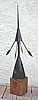
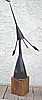
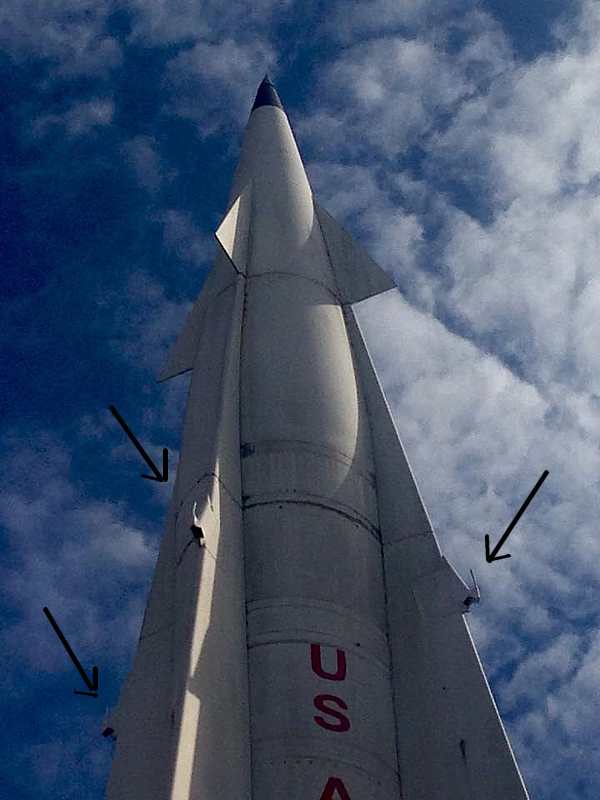
Nike Hercules - nuclear safety - Barometric Probe
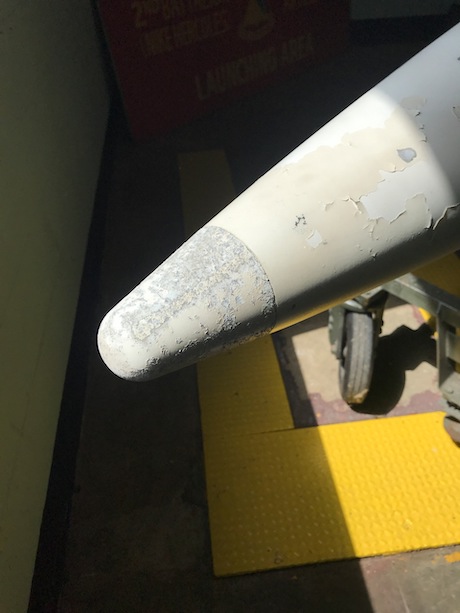
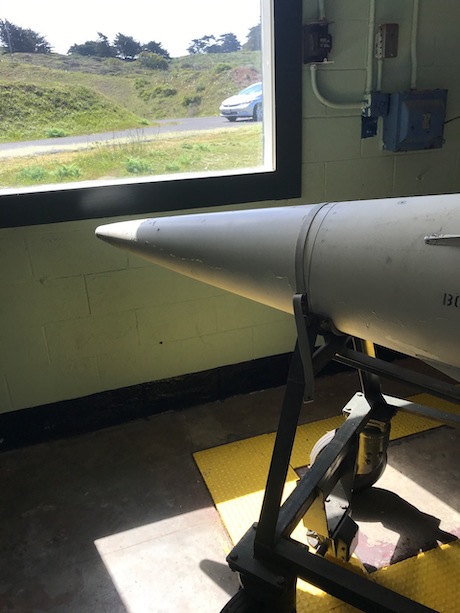
To keep the warhead from exploding near the ground, and causing high levels of
ground radioactivity, a "Barometric Probe" was used
- photos courtesy of
Ed Bisconti,
identified by Robert H Foy
| 
| 
|
Rod VanAusdall wrote:
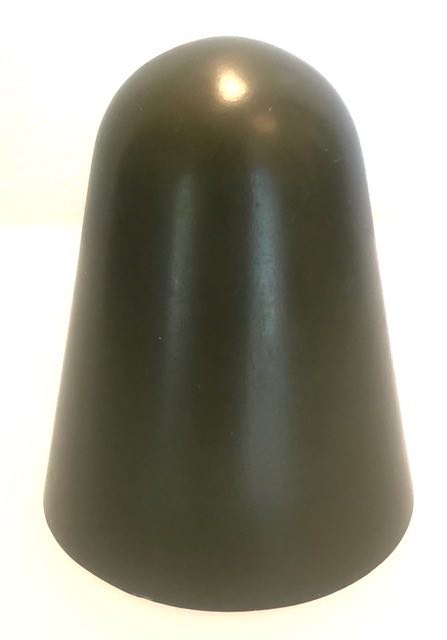
Those nose spikes are properly termed a "Barometric Probe" commonly referred to
as a "baro probe". The probe is a part of the warhead system and was used to sense
the barometric pressure (as opposed to dynamic pressure) at altitude.
This pressure sensing was then sent to the barometric switches (baro switches)
in the warhead where they served to "advise" the warhead circuitry of the missile
altitude. This information was used by the warhead to complete warhead arming
sequences and to provide altitude warning in the fail-safe system to provide a
"one point" or HE detonation as required by a missile returning to low altitude
with no direct fail-safe signal received from the MTR. The baro switches were
set at the time of mating the warhead to the missile (this was done by use of the
T 4014 Test Set in the Warhead Building) and could also be set at the launch area
after mating.
There were two altitude settings - high and low - arming sequence and fail-safe
sequence settings. The baro probe was a delicate mechanism and was always part
of the Technical Proficiency Inspection as relates to the unpacking (they came
in steel containers), cleaning, and mounting. It was carefully inspected for
freedom of movement and cleanliness.
There came a time when the Baro Probe was requiring excessive maintenance as
they were always exposed to weather (we are speaking of above ground sites now)
and a bright red cover, which resembled a doghouse for a dachshund was installed..
It made the missile look odd but kept the probe clean. I think this came about
around the time of the "President Kennedy" plug if anyone remembers that.
The probes were a big pain but served a very important purpose.
The "plain old nose spike" was a dummy spike so one couldn`t tell (by casual
observation) which was a nuclear warheaded missile and which was an HE only
as a nuclear warheaded round always had a baro probe mounted and of course HE did
not require one. We are speaking of counter-intelligence measures. Perhaps only
used in Europe - I know they were used in Europe but by the time I served in the
States around Cincinatti (the Dillsboro, Indiana site guarded Cincinatti)
I saw no dummy probes - only covers.
The plain old or dummy spike became obsolete when the baro probe cover came in to
use as the covers hid all sight of the probe.
|
The nuclear warheads were heavily guarded
From John Meskanick indicates.
|
... I was sent to Europe and served with Team D,
66th USA Artillery Detachment, 5th Artillery Group, Special Ammunition
Support Command. I was stationed with the 21st Fla Rak Battalion, German
Air Force, near Westkirchen, West Germany. I was responsible for assembly
and maintenance of the ten nuclear warheads that were a part of the
Battery's missile inventory. We had eight weapons equipped with 3 kiloton
warheads and two equipped with 30 kiloton warheads. We had both surface to
air and surface to surface capability.
The German Airforce was responsible
for all of the missile, launching area equipment, and fire direction center
equipment maintenance. The Germans also were in command of the site. Total
strength of the American special weapon support and security were
twenty-eight officers and enlisted men.
The Detachment was made up of an Commanding Officer (Captain), and
Executive Officer (1st Lieutenant), a Warhead Officer (2nd Lieutenant),
Team Sergeant (E-7), Security Sergeant (E-6), Warhead Sergeant (E-6), three
Warhead Maintenancemen (E-5), one Clerk(E-4), two Cooks (E-4), and sixteen
security personnel (E-3 and E-4).
|
From Andy Anderson
|
All Alaska site were closed in 1979. What a sight it was, for Anchorage, to
see a convoy of nuclear warheads rolling thru the city at 7 :00 a.m. in the
morning.
Over 40 trucks with armed guards all along the route.
We totaled up the yields and came up with 1800 megatons
Much of the time the warheads were transported by Chinook to Elmendorf AFB
where they were loaded on C-141 Starlifters.
|
From Richard J. Pecoraro
|
... the Nike Hercules Weapons
Support Detachment-Korea(NHWSD-K), a special weapons custodial detachment
[was deactivated in 1980].
Our job was to assume control of one or more Korean Nike sites in case the
balloon went up. And be ready to accept one or more of our "special"
warheads. We were a small unit of about 110 people. Mostly NCO's and
Officers. It was created out of selected soldiers from 2/44 as it
deactivated in 77. We ended up with a LTC Detachment Commander and a SGM as
a First Sergeant believe it or not.
|
From Bob Wilie Nov 13, 2000
|
Arm Plugs for the Hercs on National guard sites were kept in a two dial safe
with the combinations in the hands of Regular Army personnel.
I guess so NJ could not attack NY
|
The nuclear warheads had special handling
From Andy Anderson
|
I was a team member for the authentication
process using the PAL device. We had to move from site to site while
assigned to the 43rd.
The PAL device is the Permissive Action Link. Sometimes called the Kennedy
Device.
I was one of the two people that had to authenticate the nuclear release
authorization.
The PAL device was a shorting plug in the special warheads.
It was a combination lock installed at the arming plug location.
The arming plug dictated what type of burst you would get.
- One plug was for a surface mission.
- The other was for a air mission.
A ground burst was set at 600 feet above ground level. The is the altitude
that would deliver the most damage for a ground burst.
This type of mission was used against ground troops and tanks.
The other type of arming plug was used against aircraft groups of 12 or more
aircraft.
This plug also offset the guidance system to cause the missle to fly above
the target at 600 feet and detonate, causing the burst to take out every
aircraft in a 4 mile radius.
In order to control the launch of a nuclear weapon, the PAL device was used.
It, when installed, was a shorting plug, that prevented the missle from
launching and kept the warhead in a safe condition (i.e.. not armed).
When the president gave the ok to fire.
An encoded message would come from CINCNORAD with the combination to open
the PAL device. This was my job.
I opened the PAL, armed the missle with the correct arming plug and punched
the fire button.
There was no voltage in the PAL. I was just a plug that disabled the
launching.
It also served another purpose. If the weapon fell into the wrong hands and
they tried to take the PAL device off by hammering, cutting or whatever, the
missle would self destruct. This was never told to allies on the custodial
sites.
It would not detonate with a yield, but would do a HE explosion with a small
amount of contamination.
|
- the following is
not Nike, but gives some idea of the special handling to reduce the
possibility of unauthorized risk - from
Donald E. Bender
|
Just FYI ... found this while searching
around in DejaNews.
Don B.
---------- Forwarded message ----------

(beginning of original message)

Subject: Re: Two man principle
From: thunder@rmii.com (Ed Rasimus)
Date: 1999/02/19
Newsgroups: rec.aviation.military
BOD  wrote:

>Does anyone know how the 'two man priciple' was achieved when releasing
>nuclear weapons from single seat aircraft such as the Jaguar? or is it a
>simple case of there WAS no two man principle for single seat aircraft?

Two man control is in effect until nuclear release (i.e. the official
authorization to launch by the national command authority). That means
the pilot of a single engine airplane on nuc alert is always
accompanied by the crew chief when entering the "no lone zone" around
a weapon loaded aircraft.

On alerts it takes two people to cross the red line around the
airplane (the sky cop is supposed to shoot you if you don't have a
partner). The pilot goes up the ladder and the crew chief stays in
sight of the pilot. Both players are in view of the security police
type who remains outside the zone.

On an alert scramble the engine is started and the command post relays
a message. If the message is a real war launch, then you roll and
two-man is suspended. If you don't have a real launch message you
don't have the necessary codes to arm the bomb. You also probably
won't be able to get out of the alert area because the gates will stay
closed and there is usually a fire engine or other large truck
blocking the taxiway.

Single seat aircraft pulled a lot of Victor alert over the years in
F-84, F-100, F-104, F-105 and of course also in Jaguars and Hunters
and Mirages. Never a problem for 2-man control.


 Ed Rasimus                   *** Peak Computing Magazine
  Fighter Pilot (ret)         ***   (http://peak-computing.com)
                              *** Ziff-Davis Interactive
                              ***   (http://www.zdnet.com)


(end of original message)
|
The nuclear warheads had special training
From Rod van Ausdall
|
... and noted no mention of the Nike Hercules Training Warhead - nuclear -(simulated the
M31 nuke) which as you may know, was used in TPI and other training routines. The warhead
was so fashioned the Nuclear Test team could throw various switches in it to cause the T74
to give false (and alarmimg) readings on the T4014 test set and the launcher control station
thus causing the crews to take action which was then graded -pass/fail by the inspection team.
|
and
|
Ed asked me if I would write a paragraph or two about the Nike Hercules Training Round,
including the Training Warhead, the T 74. Here goes.
The Nike Hercules training round was remarkable for its` color - black. It was a complete
round (included the missile and booster cluster) I believe these rounds were selected from
production rejects, painted black, and entered into the training inventory after they were
stripped of operational components and appropriately weighted. The first one I saw simulated
the "stovepipe" guidance (forerunner of the "mushroom" guidance package) with a dummy
stovepipe guidance section.
Outwardly these rounds appeared identical to the war reserve items except for the color.
Weight was identical and the round could be handled (transported, joined, etc) as if it
were the "hot" item. A black missile container was provided.
The T74 Training warhead with a training XM75 Cartridge (adapter to the M31 warhead)
was also painted black as was its` XM 401 container. The warhead cartridge had all the
electrical connections available for assembly and a training wiring harness was included
in the package. Weight was about 1200 pounds, simulating the War Reserve item.
Dummy firing plugs were included as was a training barometric probe and black "doghouse".
The warhead featured a multi-switch panel behind the right rear warhead access door
(standing aft looking forward) and these switches could be thrown to cause various
indications of malfunction to appear on the T4014 Test Set during warhead mating
and checkout exercises. Technical Proficiency Inspection Teams made good use of
these switches during TPIs to test the reaction and corrective procedure skills of the
Assembly teams. Downrange, on the launcher, the use of the "fault" switches could
give bad indications on the LCI to test the launch crews.
The use of the training round was of great assistance in crew training and saved wear
and tear on the War Reserve items. I have never seen a Nike Ajax trainer although I
have seen and used Nike Ajax training warheads.
I think the above is reasonably accurate. I have searched my memory for any use of the
trainer during Annual Service Practice (ASP) and cannot remember any such instance.
I am sure they were not used during ASP as that was, of course, a live fire exercise with
the HE warhead and commingling a training item for a crew proficiency test would have
been ill advised. I know during my ASPs they were not used.
Rod vanAusdall
rcvandall@gmail.com
|
|
from Dave, August 28, 2007 ...
|
Seems there is a little misconception regarding the test sets for the Nike Hercules warhead:
Yes there is a T-4014 used by the site personnel in the launcher warhead room for main setting of the baros for altitude only. No calibration.
What they haven't mentioned is there are several more:
- The T-4016 is used at depo to test and calibrate the baros and other circuitry
- The T-4115 is used to test all the warhead arming, plug, PAL and other circuitry
- The T-4046 is used to actually test the warhead detonators thru the SA/SS plug connector.
- I bought one once at a surplus store.
The T-4115 can also test the main engine ignitors, and the main harness.
We had to memorize the entire circuitry and operation of all of these:
- Regarding the weapon yields:
from what I remember the W31 had 4 possible settings and they are MUCH larger than anything you have listed.
roughly 10Kt to 440KT. They were also color coded with a reflective tape strip so you could tell at a glance what the yield was thru a small access door.
- There was a training W31 that was typically semi flat powder blue and was kept in a std 409 can (the weapon container).
The container had a powder blue square on it and on some the whole container was blue.
- WR rounds (and the cans) were oil based OD flat with white stencil Marsh ink.
- From what I can tell the maps included the nuclear weapons depo location names but not their location names. For example the one in the Van Nuys cornfield was NWSS #5 (I still have one of my access cards). I have it tagged on my Google Earth.
- Some RA personnel had the full 20 digit combinations to the PAL locks. Did not require 2 man rule.
Funny story: We had to calibrate the load test equipment regularly so when we received a new dynomometer, we had to tie a sling to it and run it up to 10,000 lbs using chain fall and a rolling overhead crane. I went to loading this one up but just couldn't get it to go all the way to 10K lbs and STAY there. It would just sag back to 3K or so. Then I hear the warrant hollering for me from his office. He curses me out and comes running. He makes me step back to look and then I realize the crane is collapsing more each time I yank it down. We had received a 100K lb dyno and we totally ruined the crane. We were all amazed the sling held the 100K lbs. We sent the dyno back to the mfg and got a new crane.
Nervous story:
As weapons DEPOT folks we regulary had to go to the various sites to fix / repair weapons and /or test things before major inspections. We received and order to place stamped serial numbers on ALL the weapons in the LA inventory. So I took a small stamp set and a berylium hammer and practiced and practiced. Then I went and stamped them all. Nervous part - The serial number was 4 inches from the PETN dual detonators and one wrong hammer hit/slip could have ended that sites existence (and mine). The site folks never knew.
Second nervous story:
LA site 78 just up on top of a hill near Malibu beach and Topanga canyon had a wildfire and I had just arrived. The fire went into a 'storm' and forced everyone into the bunker and we used the washdown hose to cool the bay doors from the inside as the fire raged for a few hours outside. When we went outside the paint was burnt off the doors. Scary considering what we had just inside.
Enjoy the site but I don't see ANY of the other weapons folks listed.
dave
|
An informative link to EMP - ElectroMagnetic Pulse (link dead),
provided by
Richard Levine, Nov, 2010 - Local copy
Return to top
|
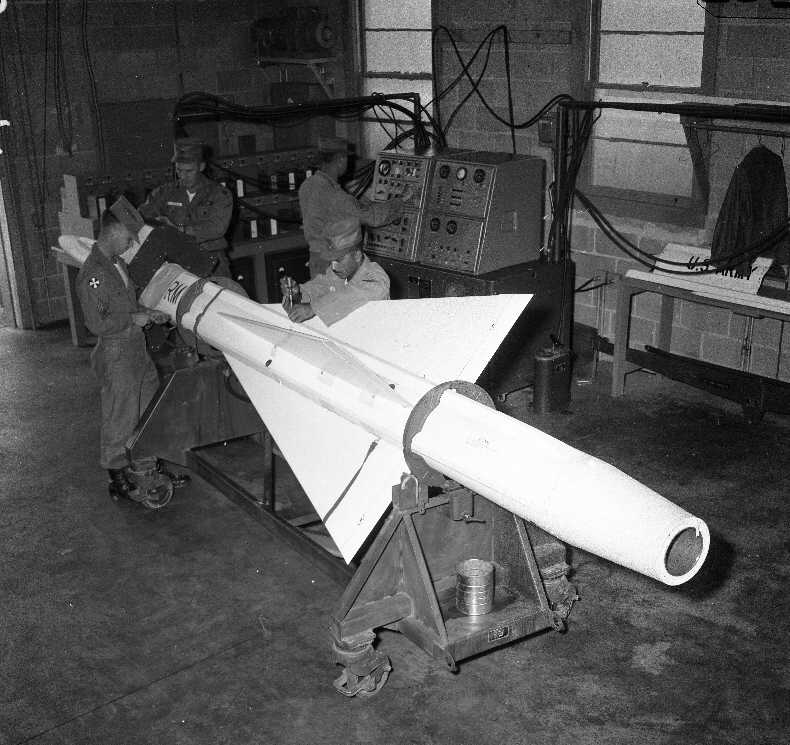
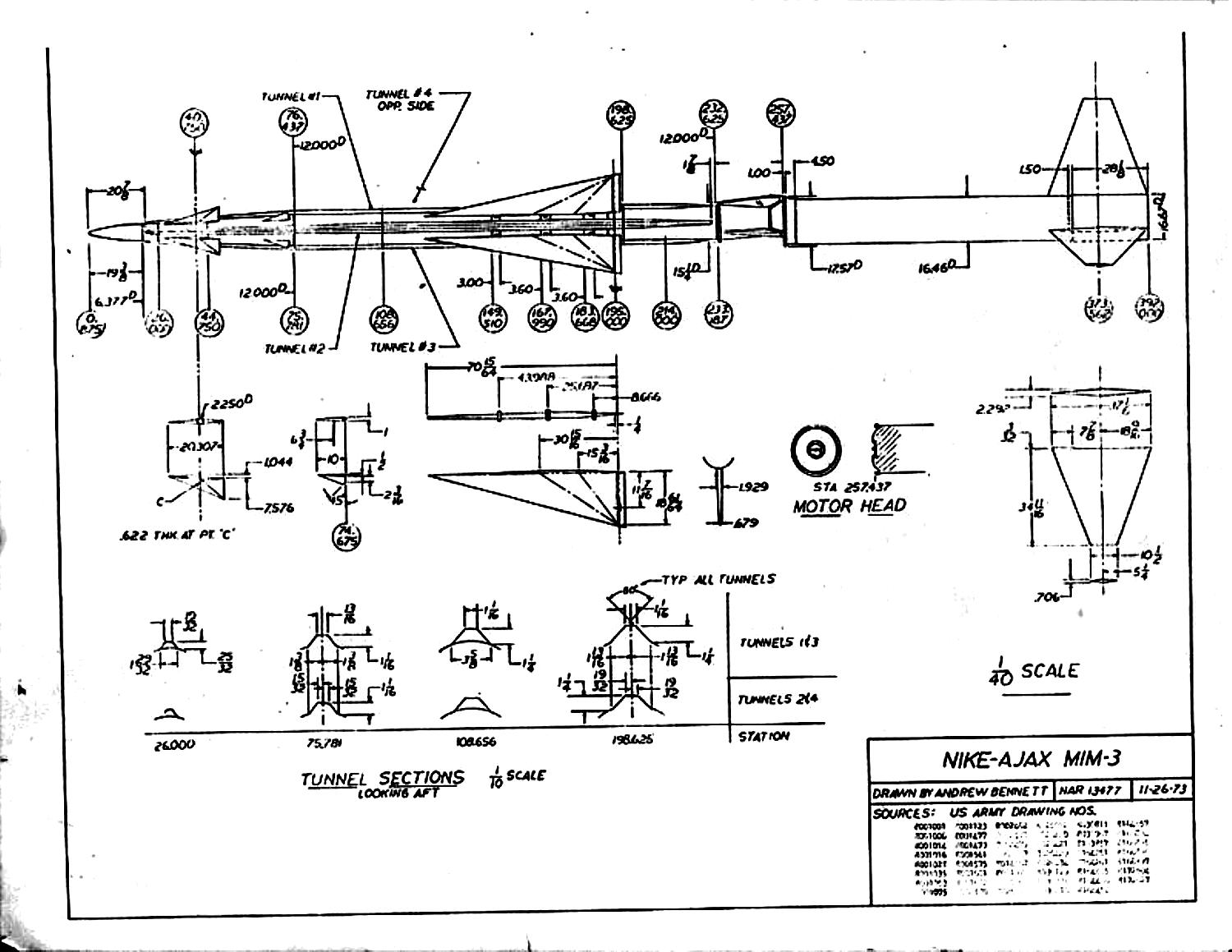
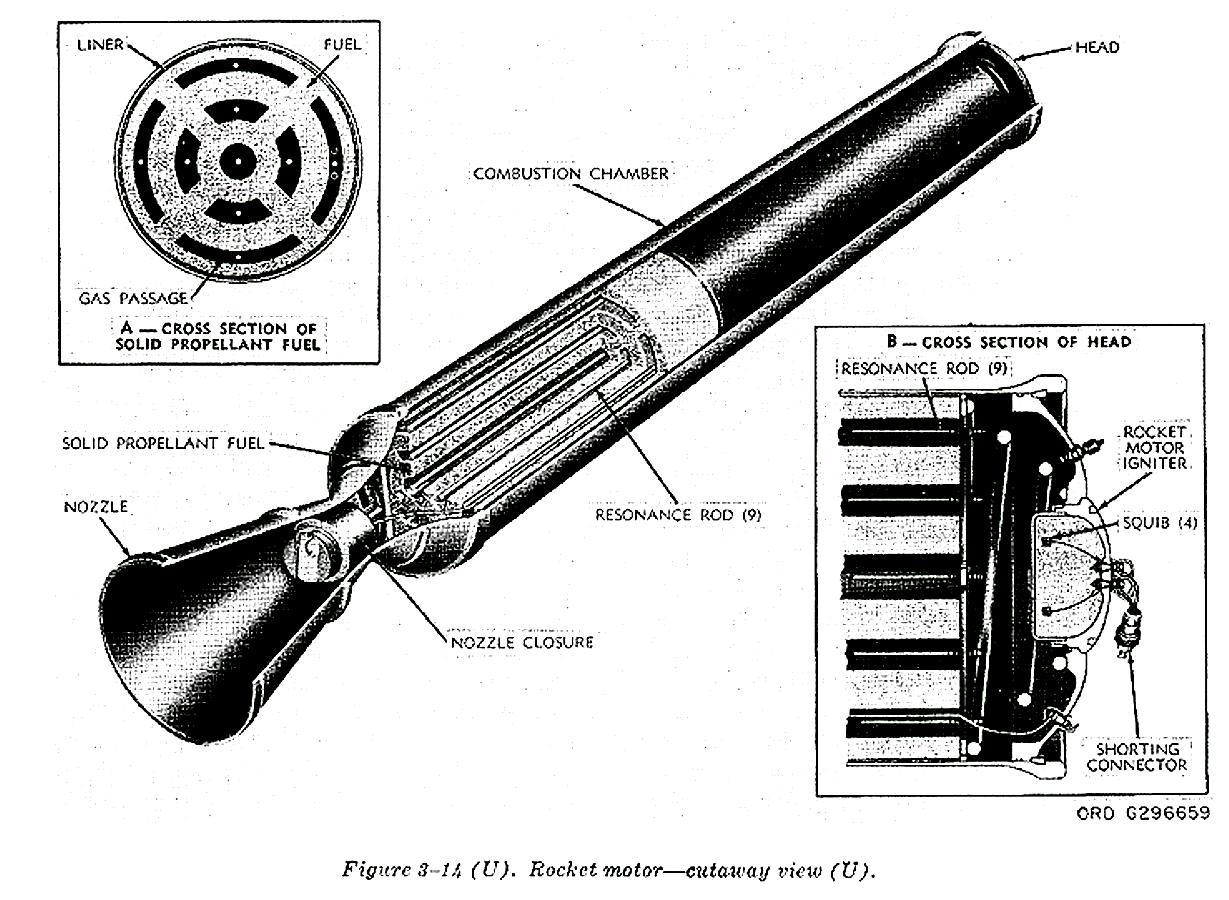
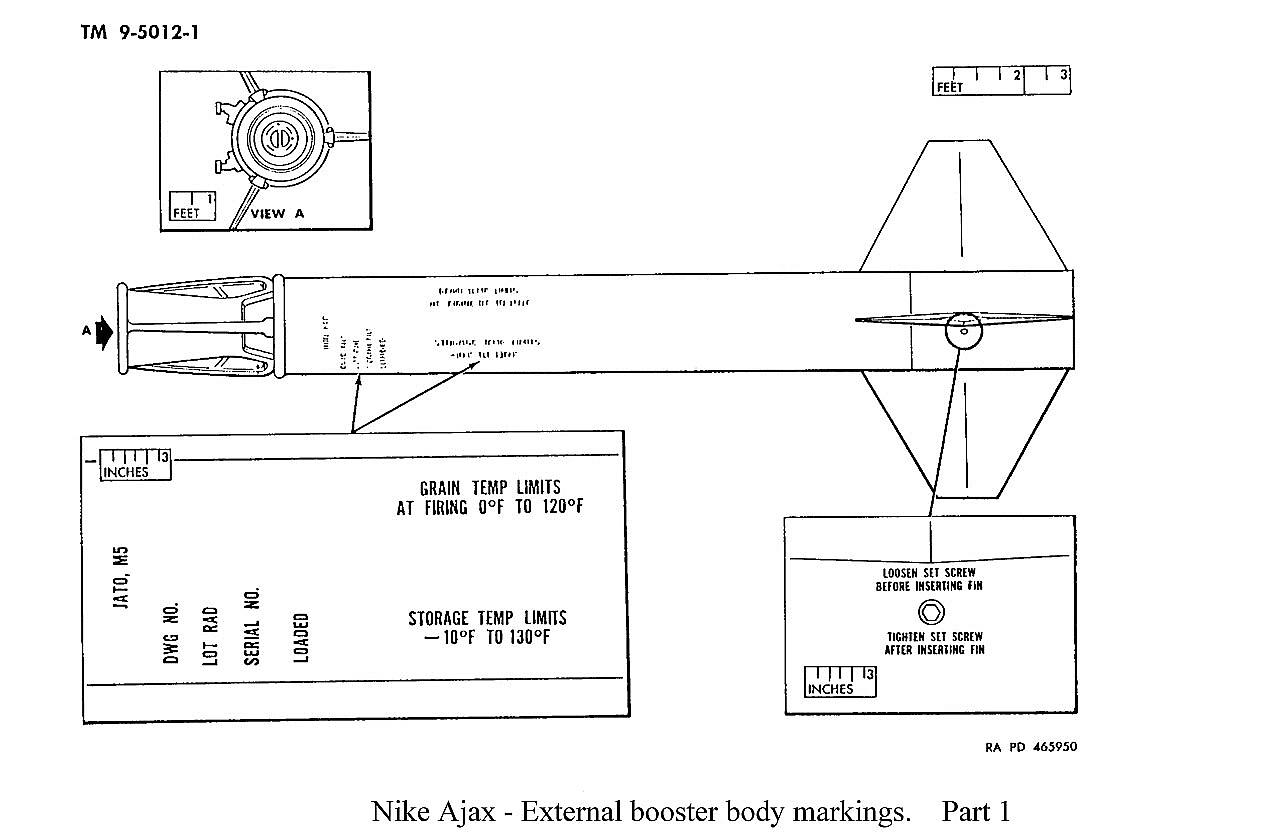
 Nike Ajax (with a range of about 25 miles) as MIM-3A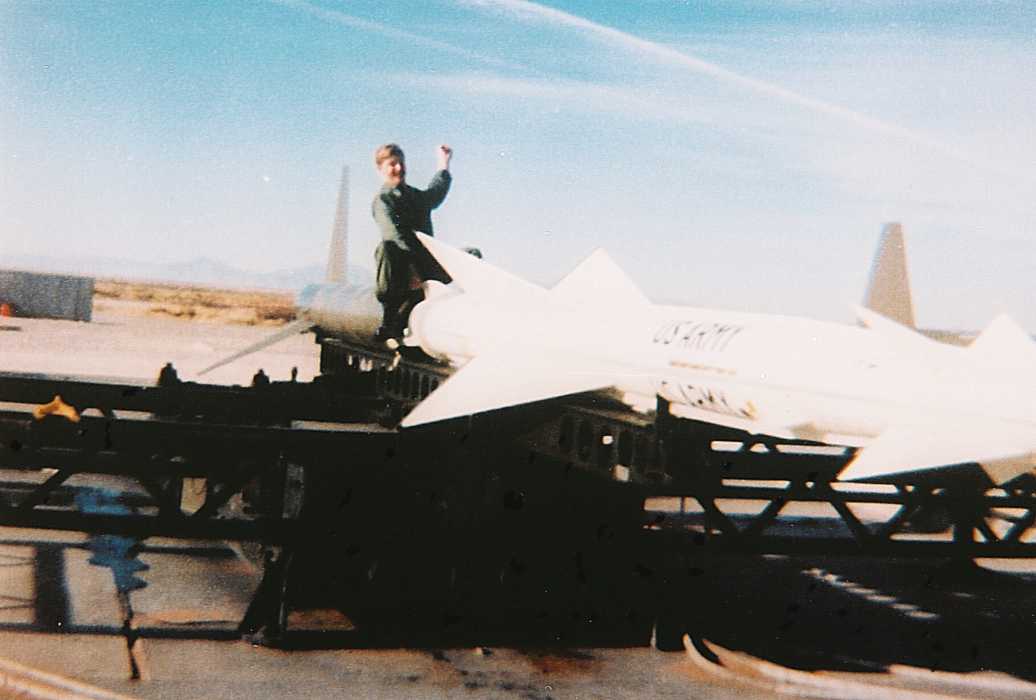

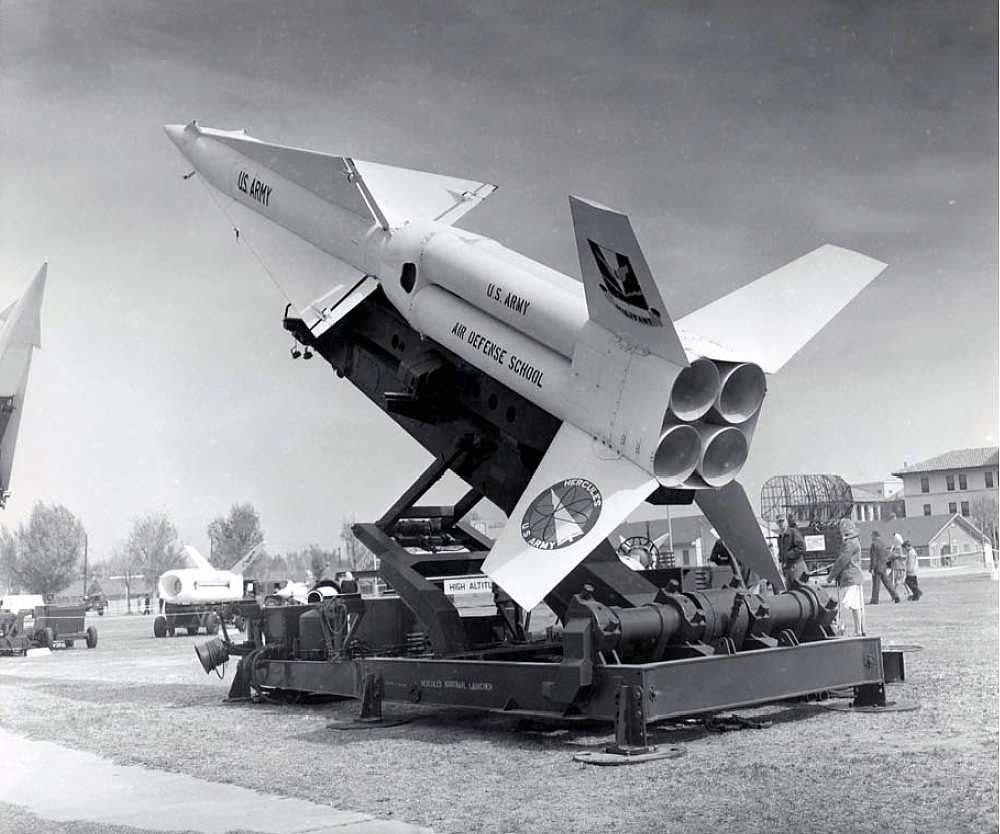
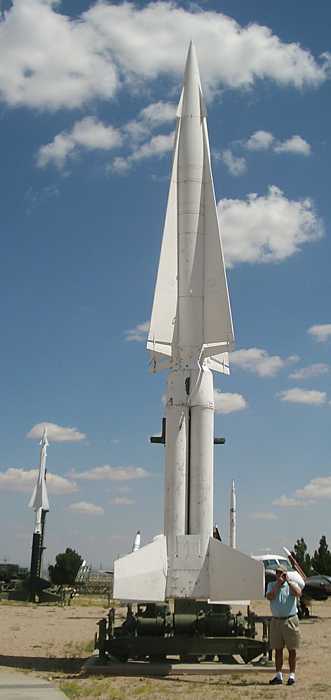
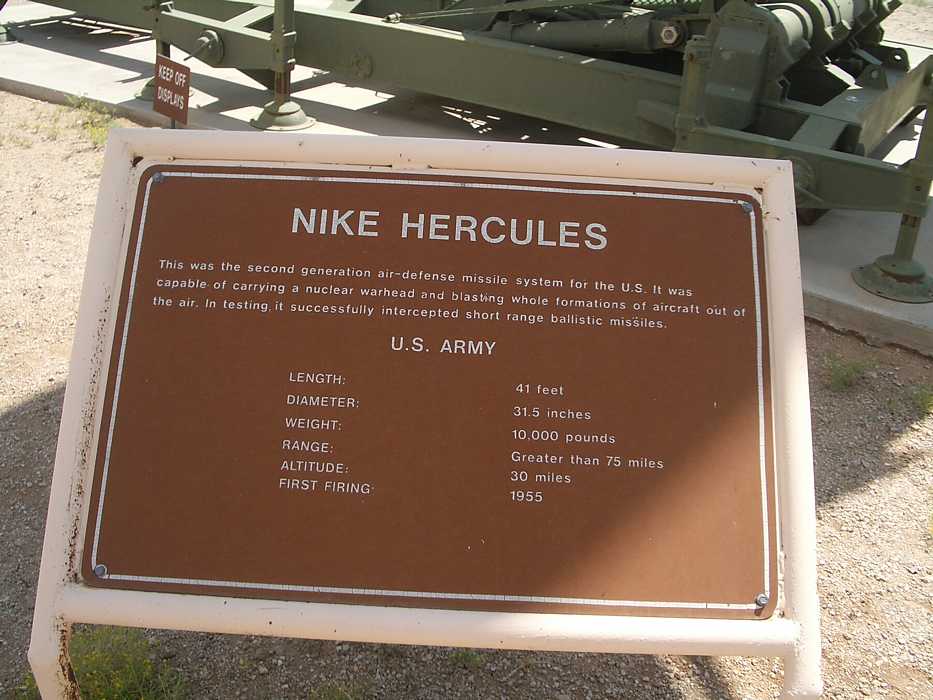
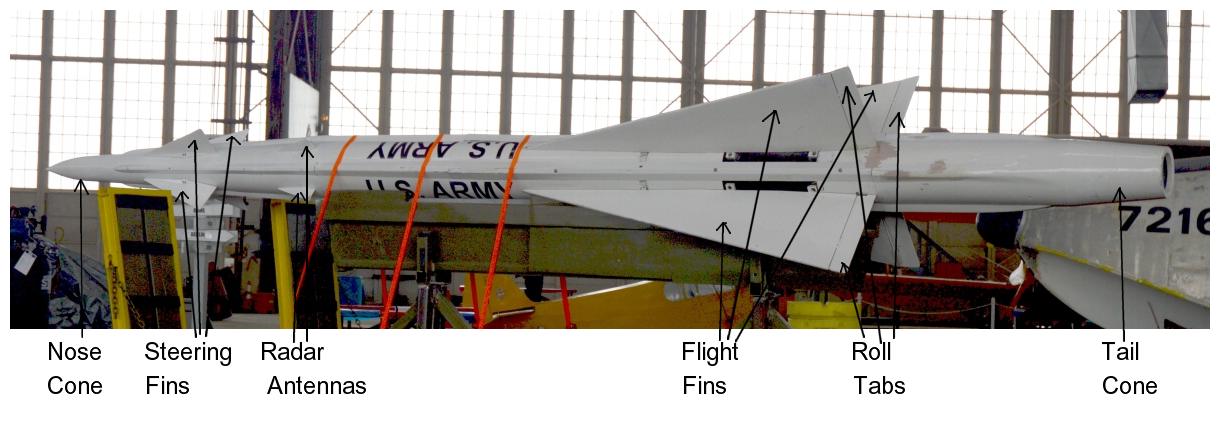
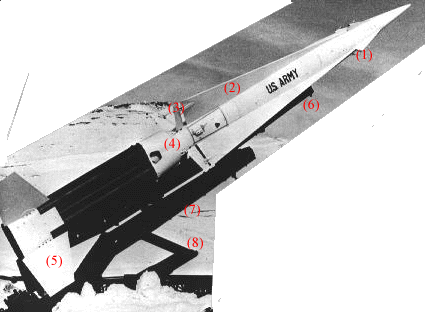
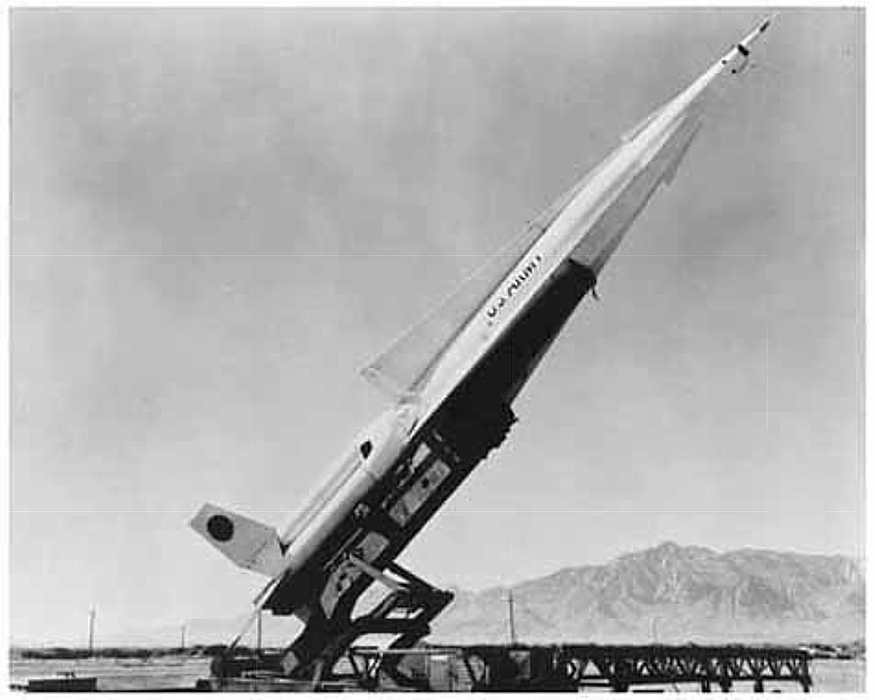
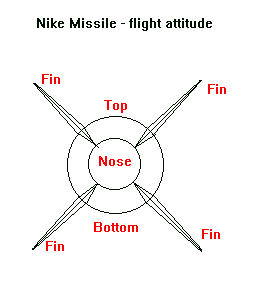
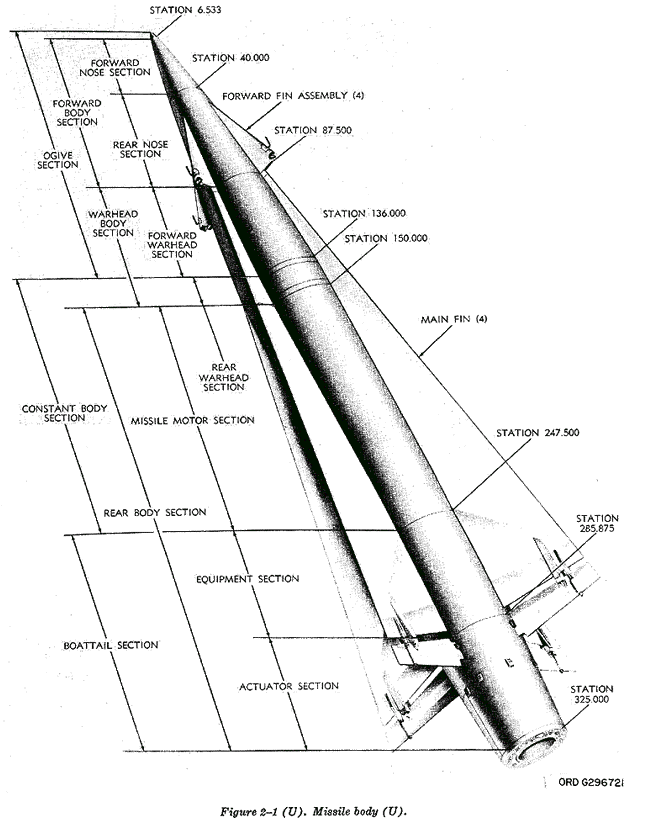 63 K bytes
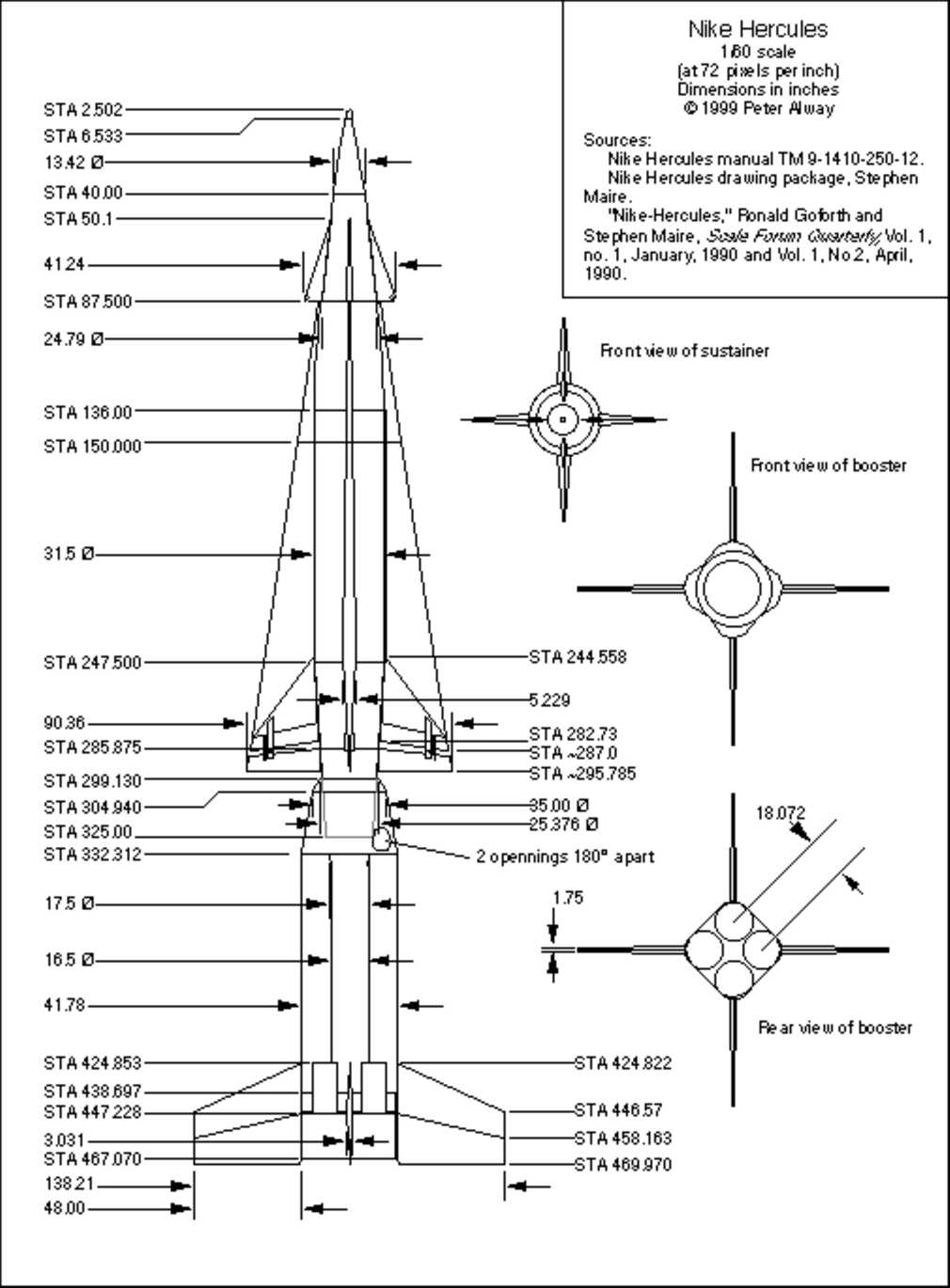 106 K bytes
Dimensions - source unknown
106 K bytes
Dimensions - source unknown

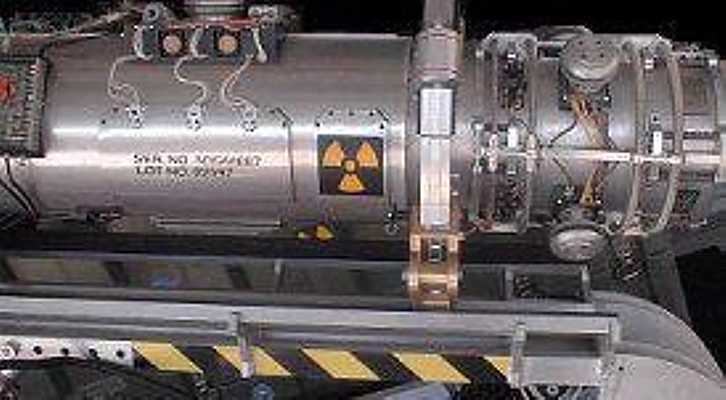
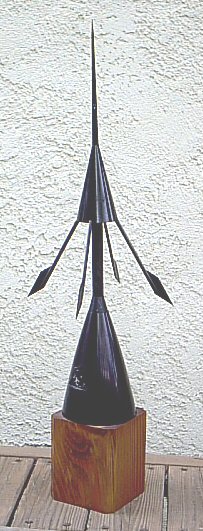
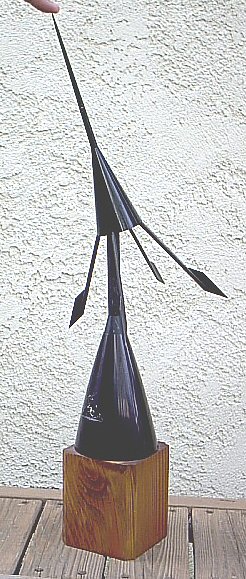
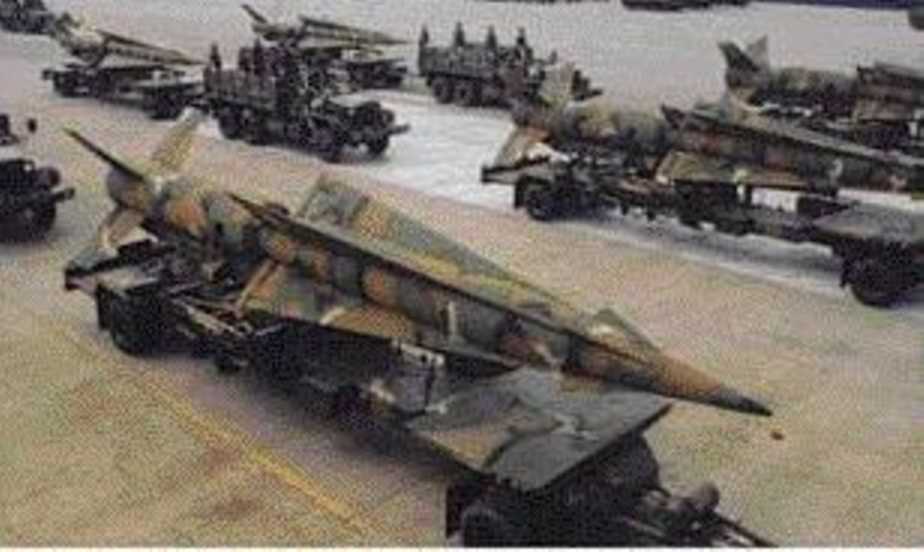 photo shows a larger single barreled booster
(25 K bytes) for their Hercules (or a rumored South Korean surface-to-surface
variant) of the Hercules)
Photo found by
Daemon Hobbs, Capt, USAF, on the
Korean Ministry of National Defense site.
"It shows the surface-to-surface variant of the Nike during a recent ROK military parade.
... it shows the Nike is alive and well in the ROK.
photo shows a larger single barreled booster
(25 K bytes) for their Hercules (or a rumored South Korean surface-to-surface
variant) of the Hercules)
Photo found by
Daemon Hobbs, Capt, USAF, on the
Korean Ministry of National Defense site.
"It shows the surface-to-surface variant of the Nike during a recent ROK military parade.
... it shows the Nike is alive and well in the ROK.





 gyroscope